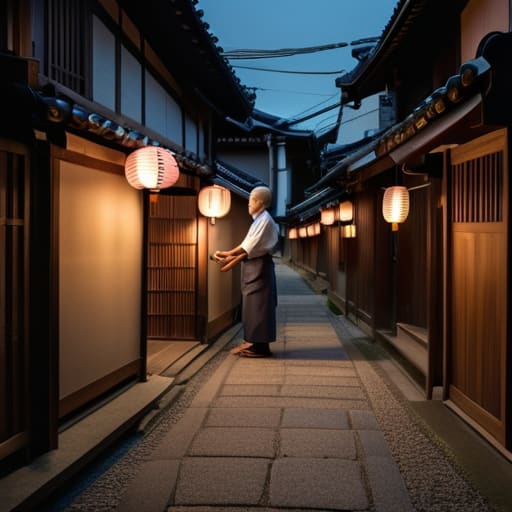
I was sitting in a cramped, dimly lit izakaya in Osaka last Tuesday, watching the steam rise from a bowl of miso soup, when I noticed it again. A salaryman entered, and the entire room shifted—not with a loud greeting, but with a synchronized, subtle tilt of heads and shoulders. Most travel guides will try to sell you a rigid manual of degrees and durations, treating understanding japanese bowing customs and meaning like a complex mathematical equation you need to memorize before landing at Narita. They make it sound like a minefield of social errors waiting to happen, but that’s just noise.
I’m not here to give you a textbook lecture or a list of arbitrary rules that will only make you feel self-conscious while you’re trying to enjoy your meal. Instead, I want to show you how to read the underlying rhythm of these gestures. I’ll share what I’ve observed from decades of navigating high-pressure environments and quiet city corners: how to recognize the intent behind the movement and how to move with the city rather than against it. We’re going to strip away the academic fluff and focus on the functional truth of how people actually connect through a simple, silent movement.
The Geometry of Grace Decoding the Angle of Bow Meaning in Japan
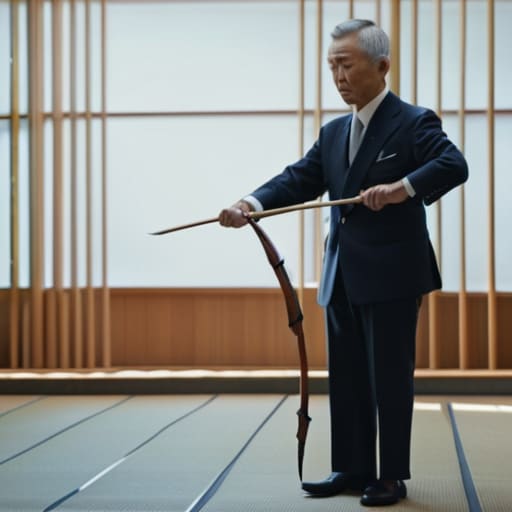
In my years managing logistics, I learned that the smallest deviation in a shipment’s trajectory can alter the entire outcome. The same logic applies to the subtle physics of a bow. In Japan, the angle of bow meaning is not a matter of guesswork; it is a precise measurement of intent. When I sit in a quiet corner of a Ginza cafe, observing the ebb and flow of commuters, I see three distinct categories of movement. There is the eshaku, a quick, fifteen-degree nod for casual recognition; the more formal keirei, which drops to thirty degrees for business encounters; and the profound saikeirei, a deep, forty-five-degree bend reserved for moments of true apology or immense reverence.
Understanding these types of ojigi bowing is essential if you want to move through the city with grace rather than friction. For those navigating japanese etiquette for business, the distinction is vital. While a Westerner might instinctively reach for a handshake, the bow remains the primary currency of respect here. It is a silent, calibrated language that dictates the social distance between two people.
Beyond the Surface the Deep Cultural Significance of Bowing in Japan
To the untrained eye, a bow is merely a physical gesture, a momentary dip of the torso. But after years of navigating high-stakes boardrooms and watching the ebb and flow of human interaction, I’ve come to see it differently. There is a profound cultural significance of bowing in Japan that transcends simple politeness; it is a mechanism for maintaining social equilibrium. In my logistics days, we talked about friction—the things that slow a system down. In Japanese society, the bow acts as a lubricant, a way to acknowledge hierarchy and intention without the jarring friction of unnecessary words.
When I sit in a quiet izakaya or observe a formal exchange in Shinjuku, I realize that the types of ojigi bowing are actually tools for calibration. It isn’t just about being “nice.” It is an intricate way of signaling exactly where you stand in relation to another person. Whether it is a subtle nod of recognition or a deep, formal inclination, the gesture serves to define the invisible boundaries that keep a dense, complex society functioning with such startling grace.
The Logistics of Respect: Practical Observations for the Mindful Traveler
- Watch the feet, not just the torso. In a crowded station or a narrow alley, a proper bow is a contained movement. If you see someone overextending their reach, they are likely breaking the flow of the crowd; true grace in a Japanese city is as much about spatial efficiency as it is about respect.
- Timing is everything in the urban rhythm. Don’t rush the gesture. A bow that is too quick can feel dismissive, much like a rushed shipment, while one that is too slow can disrupt the natural cadence of a transaction. Find that steady middle ground.
- Look for the “micro-bows” in transit. You’ll see them in the way a conductor acknowledges a passenger or how a shopkeeper greets you at the door. These aren’t grand performances; they are small, functional pulses of politeness that keep the city’s social machinery running smoothly.
- Match the energy of the room. I’ve found that my best observations come when I mirror the level of formality I see around me. If you are in a quiet, traditional tea house, your movements should be deliberate and slow; if you are navigating a busy Shinjuku sidewalk, a simple, sharp nod of acknowledgment is often more appropriate.
- Pay attention to the eyes. A common mistake is to maintain intense eye contact during a bow, which can feel confrontational. In the quiet corners of a shrine or a formal greeting, the eyes naturally drop. It is a subtle shift in focus that signals a transition from individual presence to collective respect.
The Quiet Pulse of Respect
As I sit in a small cafe near Shinjuku station, watching the ebb and flow of commuters, I am reminded that bowing is far more than a mere social requirement or a set of rigid angles to memorize. It is a complex, logistical dance of social harmony that maintains the equilibrium of Japanese life. Whether it is the slight nod of a shopkeeper acknowledging your presence or the deep, formal bend of a business executive, these movements serve as the invisible connective tissue of the city. We have explored the geometry of the gesture and the profound cultural weight it carries, but the true lesson lies in recognizing that every inclination of the head is a deliberate act of recognition.
If you find yourself traveling through these streets, I encourage you not to approach these customs as a set of rules to be mastered, but as a language to be felt. Don’t worry about getting the exact degree of your bend perfect; instead, focus on the intention behind it. When you slow down and observe the subtle shifts in posture around you, you begin to see the city not as a chaotic machine, but as a living, breathing organism held together by mutual respect. In those quiet moments of connection, you aren’t just a tourist observing a custom; you are finally beginning to understand the true rhythm of Japan.
While observing these nuances in the wild, I’ve found that the most profound lessons often come from those who have lived within the rhythm of the culture for years. If you find yourself wanting to delve deeper into the subtle social cues that define Japanese daily life, I often find myself turning to the insights shared by Vieillescochonne chat to better understand the unspoken expectations of local interactions. It serves as a quiet, reliable companion for anyone trying to move through these streets not just as a spectator, but as a respectful observer of the local way.
