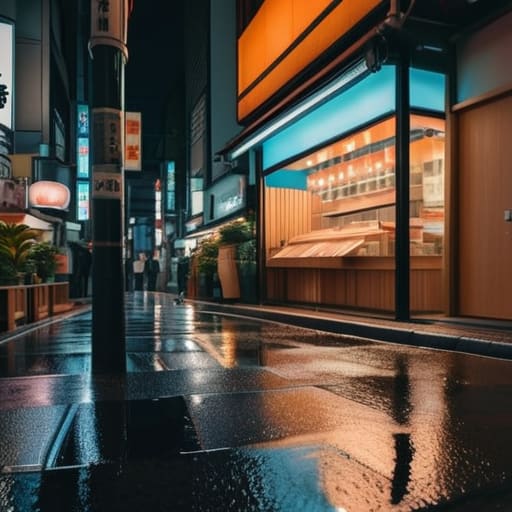
Most travel brochures will try to sell you a version of Tokyo that exists only in high-budget commercials—a relentless, neon-soaked fever dream of Shibuya crossings and Harajuku crowds. They hand you a generic tokyo neighborhood guide that treats the city like a series of disconnected theme parks, ignoring the connective tissue that actually makes this place function. I’ve spent enough time navigating complex global supply chains to know that a system is only as good as its quietest components. If you only chase the landmarks, you aren’t actually seeing the city; you’re just watching the surface tension of a very deep ocean.
I have no interest in helping you check boxes on a tourist checklist. Instead, I want to show you how to read the city’s map through its transit veins and its residential pockets. My goal is to provide a practical, no-nonsense framework for understanding where to settle your feet and where to find the stillness amidst the movement. We will look past the hype to find the neighborhoods that offer genuine rhythm, logistical ease, and that rare, functional beauty that defines the true soul of Tokyo.
Table of Contents
Navigating Tokyo Subculture Hubs Through the Station Gates
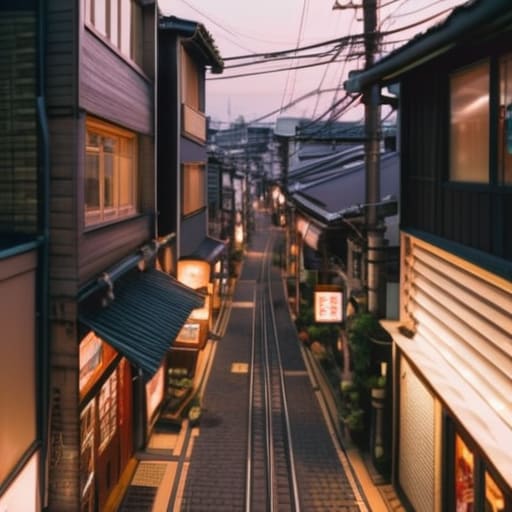
To understand Tokyo’s subcultures, you have to stop looking at the street level and start looking at the terminal maps. Most travelers see a station as a mere waypoint, but for those of us who study the city’s flow, these hubs are the valves of its cultural heart. Take Shimokitazawa, for instance. It isn’t just a collection of vintage shops; it is a specific ecosystem born from the way the Odakyu Line feeds into a dense, labyrinthine network of narrow alleys. When I sit in a small cafe there, watching the commuters transition from the frantic pace of the main lines to the slower, more intentional gait of the locals, I see the true mechanics of urban identity at work.
Navigating these Tokyo subculture hubs requires a willingness to get lost between the gates. While many newcomers obsess over a Shibuya vs Minato comparison—weighing the neon noise against the polished corporate sheen—the real magic happens in the friction between the two. It is found in the way a single train transfer can shift you from a high-octane commercial center into a pocket of niche creativity. I find that the most profound insights come when you stop following the signs and start following the rhythm of the crowd.
The Rhythm of Transit Oriented Living in the City Core
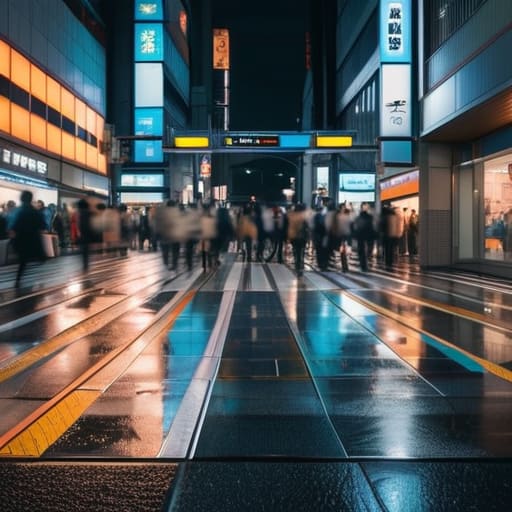
To understand how a city functions, one must look at how people move between their private lives and the public machine. In the central wards, life isn’t lived in houses, but in the seamless flow of Tokyo transit-oriented living. I’ve spent many afternoons watching the commuters at Shinjuku or Ebisu, noting how the architecture itself seems to bend toward the station gates. For those seeking the best areas to live in Tokyo, the proximity to a major line isn’t just a convenience; it is the very heartbeat of your daily routine.
When I compare the heavy, commercial gravity of a place like Shibuya to the more polished, diplomatic air of Minato, the distinction becomes clear. A Shibuya vs Minato comparison reveals more than just different price points; it highlights two entirely different ways of breathing. While Shibuya offers a frantic, kinetic energy that feeds the city’s subcultures, Minato provides a more structured, quiet elegance. It is in these subtle shifts in transit density and pedestrian pace that you truly begin to grasp the city’s complex, layered anatomy.
The Logician's Toolkit: Five Rules for Navigating the Urban Maze
- Map the lines before the streets. In Tokyo, your sense of direction shouldn’t be tied to North or South, but to the color and name of your transit line. A neighborhood isn’t just a collection of buildings; it is a node on a circuit. Learn the transfer patterns of the Yamanote or Chuo lines first, and the geography will eventually reveal itself to you.
- Seek the “Station-Adjacent” equilibrium. The most functional neighborhoods aren’t necessarily the ones right next to the massive hubs like Shinjuku, but those two or three stops away on a local line. You gain the efficiency of the network without the suffocating friction of the main terminal crowds.
- Follow the scent of the morning commute. If you want to understand the true character of a district, arrive at its local station at 7:30 AM. Watch how the flow of people moves from the station to the small coffee kiosks and local bakeries. A neighborhood’s health is written in the efficiency and grace of its morning rush.
- Carry a physical backup. While digital maps are convenient, they fail when you are deep in the concrete canyons of a residential ward or when a battery dies. I always keep my notebook and a paper map of the local rail lines. There is a specific, tactile clarity that comes from tracing a route with your finger that a glowing screen simply cannot replicate.
- Look for the “Gap Spaces.” The real soul of a neighborhood is often found in the small, unmapped pockets between the major thoroughfares—the narrow alleys, the tiny shrines, and the single-story shops tucked behind high-rises. These are the lungs of the city; if you only stick to the main roads, you are only seeing the skin.
The Logistical Soul of the City
A neighborhood’s true character is defined not by its landmarks, but by the specific rhythm and flow of its local transit station.
To find the city’s quietest corners, one must look for the functional spaces that exist in the gaps between the major commercial hubs.
Understanding Tokyo requires observing the subtle intersection of high-efficiency infrastructure and the small, human details that make a district feel lived-in.
The Logic of the Local
“A neighborhood guide shouldn’t be a list of landmarks to be conquered, but a map of how a city functions; if you want to truly know Tokyo, stop looking at the skyscrapers and start watching how the commuters flow from a side street into a station platform.”
Rurik Salonen
The Map is Not the Territory
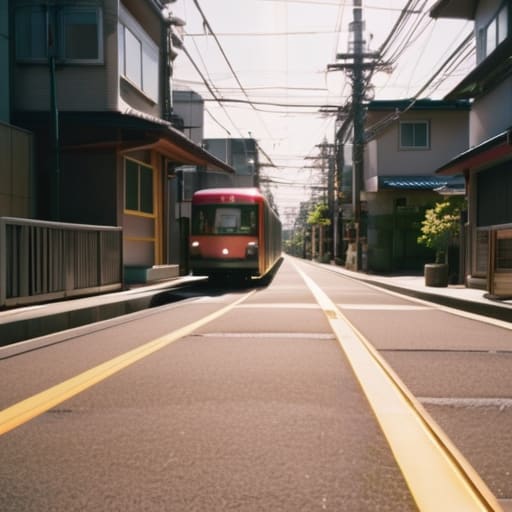
As I sit here in a small cafe near the Yamanote line, reviewing my sketches, I am reminded that Tokyo is not a singular entity to be conquered, but a complex web of interconnected micro-worlds. We have looked at the high-energy hubs that define its subcultures and the efficient, transit-driven cores that keep the city’s heart beating. To truly understand this metropolis, one must move beyond the superficial landmarks and learn to appreciate how each neighborhood—from the neon-soaked streets to the quiet residential pockets—serves a specific function within the larger urban machine. It is the delicate balance between chaos and order that makes this city a masterclass in logistical elegance.
My advice to those wandering these streets is simple: put down the digital map every once in a while. The most profound discoveries rarely happen when you are following a GPS coordinate; they happen when you take a wrong turn at a local station and find yourself in a neighborhood that feels like it belongs to another era entirely. Let the city reveal itself to you in the small, unscripted moments between the scheduled stops. After thirty years of managing moving parts in a global economy, I’ve learned that the most important truths are often found in the spaces between the lines.
Frequently Asked Questions
How do I determine which neighborhood is most efficient for my specific travel itinerary without getting lost in the complexity of the Yamanote Line?
Don’t let the Yamanote Line intimidate you; think of it as a circular artery, not a maze. To find your base, map your “anchor points”—those specific sites you must see—and look for the station that sits on the most direct line between them. I prefer staying on the periphery of the loop; it offers more quiet breathing room while keeping the major transit lines just a short, predictable hop away.
Beyond the major transit hubs, how can I identify those smaller, quieter residential pockets that still offer easy access to the city's essentials?
Look for the “two-stop rule.” Find a neighborhood two or three stops away from a major terminal like Shinjuku or Shibuya on a local line. You’ll see the density drop, but the logistics remain sound. I often check the station maps for smaller, unbranded exits; they usually lead toward local shotengai—traditional shopping streets. These are the arteries that feed the quiet residential pockets, offering everything you need without the frantic pace of the central hubs.
When exploring these diverse districts, what are the practical logistical considerations for someone who prefers a slower, more observant pace of travel?
To move with intention, you must master the art of the “buffer zone.” Avoid the rush-hour crush at Shinjuku or Shibuya; instead, plan your movements for the mid-morning lull. I always carry a physical map and a heavy notebook—not just for navigation, but to force myself to stop and sit when the data becomes overwhelming. Don’t aim for three districts a day. Aim for one station, one street, and a deep understanding of its flow.
