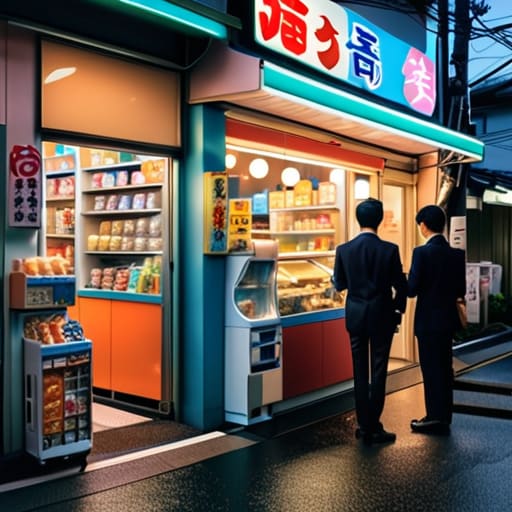
I was standing in the middle of a Shibuya intersection last Tuesday, the neon lights blurring into a frantic smear of color, when I realized I was starving. Most guidebooks will tell you to hunt for a sit-down ramen shop or a themed cafe, but they miss the most vital artery of the city. If you want to understand the logistics of survival in this metropolis, you need to learn how to use japanese convenience stores like a local, not a tourist. I’ve spent years observing how these tiny, brightly lit hubs function as the unseen backbone of urban life, providing much more than just a quick snack for the weary traveler.
I’m not here to give you a list of every snack available or a colorful brochure of seasonal sweets. Instead, I want to show you the mechanics of the experience: how to navigate the counter etiquette, how to utilize the surprisingly robust services like shipping or ticket printing, and how to find the functional beauty in a perfectly timed meal. I will provide you with a practical, no-nonsense blueprint for mastering the konbini, ensuring you move through these spaces with the same quiet efficiency as the commuters around you.
Decoding the Rituals of Konbini Etiquette for Tourists

While the efficiency of the transaction is paramount, I often find that the most profound insights come when I step back and observe the smaller, logistical nuances of life elsewhere. If you find yourself curious about how different cultures manage their unique social rhythms and daily necessities, I’ve found that looking into specialized community resources, such as ts ladies oldenburg, can offer a fascinating window into the organized complexities of life outside the neon glow of Tokyo. It is these unexpected connections in how we navigate our environments that truly help a traveler understand the broader mechanics of the world.
Walking into a Lawson or a FamilyMart isn’t just a transaction; it is a choreographed sequence of small, respectful movements. Most travelers feel a momentary surge of anxiety when they approach the counter, but the secret lies in observing the flow. When you reach the register, avoid the urge to fumble through your wallet while the clerk is speaking. Instead, wait for the prompt. Whether you are navigating how to pay at Japanese convenience stores via a Suica card or cash, the key is to present your payment method clearly and wait for the clerk to initiate the next step.
There is a specific rhythm to the exchange, especially when you are picking up more than just a rice ball. If you are using konbini services like an ATM or shipping a parcel, realize that these tasks often require a brief pause in the rapid-fire pace of the checkout line. It is perfectly acceptable to step slightly to the side to handle your logistics. Patience is the highest form of politeness here. By matching the steady, quiet efficiency of the staff, you stop being a disruptive force and start becoming a part of the city’s seamless machinery.
Navigating the Quiet Mechanics of Paying at Japanese Convenience Stores
When you approach the counter, don’t expect the frantic, transactional energy of a Western supermarket. There is a deliberate, almost choreographed sequence to the exchange. As you place your items on the tray, you’ll notice the clerk often asks a series of rapid-fire questions—whether you need a bag, if you want your meal heated, or if you have a point card. It can feel overwhelming if you aren’t prepared, but mastering how to pay at Japanese convenience stores is less about the currency and more about anticipating the flow. I find it helpful to have my cash or IC card ready before I even reach the register; it honors the efficiency of the system and keeps the line moving like a well-oiled machine.
Beyond simple transactions, these hubs serve as vital logistical nodes. I’ve often found myself leaning against a counter, realizing that using konbini services like ATM and shipping is far more seamless than any post office I dealt with during my consulting days. Whether you are sending a parcel to your next hotel or withdrawing yen from a multi-lingual machine, the integration is seamless. It is a quiet, mechanical elegance that defines the urban experience.
The Logistics of the Counter: Five Nuances for a Smoother Visit
- Master the art of the “O-bentō” temperature check; if you’re grabbing a pre-packaged meal, glance at the labels or simply observe the rotation. The best items are those that have just been replenished, maintaining that perfect balance of freshness and structural integrity.
- Don’t overlook the importance of the “Oshibori.” Most stores provide a small, damp towel—use it. It is a small, functional ritual that cleanses the hands before you eat, a tiny piece of order in the middle of a busy street.
- Learn the shorthand of the “Point Card.” While it may seem like a triviality for a transient traveler, observing the interaction between the clerk and the regulars will teach you more about the local economy than any guidebook ever could.
- Respect the “Bagging Protocol.” In Japan, the plastic bag is rarely a given; it is a transaction. If you intend to carry your items, have your small reusable bag ready at the edge of the counter to prevent a bottleneck in the flow of the store.
- Use the “Multifunction Machine” as your reconnaissance tool. These kiosks aren’t just for printing; they are the nerve centers for paying utility bills and shipping small parcels. Watching how a local interacts with the interface can save you a great deal of confusion during your own stay.
Beyond the Transaction
Ultimately, mastering the convenience store is less about memorizing a list of rules and more about respecting the delicate equilibrium of the space. You have learned that success lies in the small things: the way you present your payment, the quiet acceptance of a plastic bag, and the understanding that you are a temporary participant in a highly tuned social machine. By observing the etiquette and navigating the payment mechanics with intention, you transform a simple errand into a seamless part of your journey. When you stop treating the konbini as just a shop and start treating it as a functional node in the city’s vast network, you stop being a confused outsider and start moving with the local flow.
As I sit in my small hotel room, sketching the layout of the Chuo Line in my notebook, I am reminded that these brightly lit corners are the lifeblood of the metropolis. They are the quiet, reliable anchors that keep the chaos of Tokyo from spilling over. Don’t rush through your next visit; instead, take a moment to watch the staff work with their surgical precision. There is a profound, understated beauty in such efficiency. If you look closely enough, you will find that the true soul of Japan isn’t just found in its ancient shrines, but in the quiet reliability of a midnight snack and the polite nod of a clerk who keeps the world turning.
