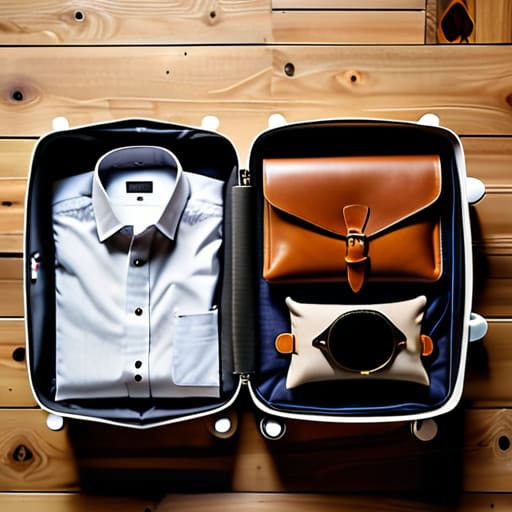
I remember standing on a rain-slicked platform at Shinjuku Station, watching a frantic traveler struggle with a bursting suitcase that had clearly exceeded every dimension limit. He was sweating, apologetic, and ultimately stuck in a logistical bottleneck that could have been avoided with a bit of discipline. Most travel influencers will tell you that you need a specialized, high-tech compression system or a designer modular kit to master the art of travel, but that is a waste of good capital. Learning how to pack a carry on bag isn’t about buying more gear; it is about applying a rigorous, logistical mindset to the few items that actually matter.
I am not here to sell you on expensive gadgets or complicated folding hacks that fall apart the moment you reach a hotel. Instead, I want to share the functional simplicity I’ve refined through decades of navigating tight connections and narrow urban corridors. I will show you how to curate your essentials so that your luggage remains an asset rather than a burden. We are going to focus on strategic layering and weight distribution, ensuring you can move through a city with the quiet, unencumbered grace that every real traveler deserves.
Mastering Space Saving Packing Techniques for Fluid Transit
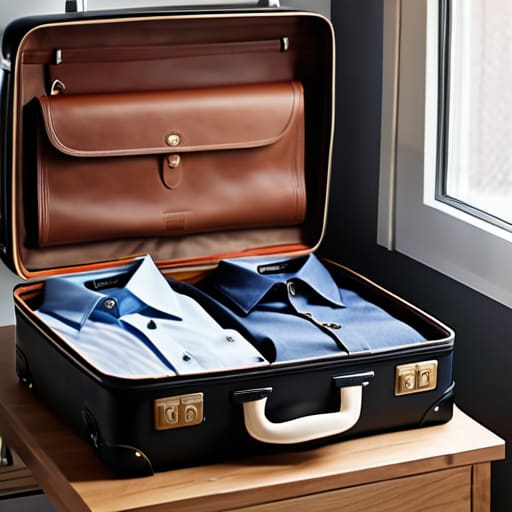
In my years managing logistics, I learned that efficiency isn’t about how much you can cram into a container, but how you optimize the volume you have. When I’m navigating the dense crowds of Shinjuku Station, I don’t want to be the person struggling with a bulging, disorganized suitcase. I’ve found that the debate of rolling vs folding clothes isn’t just about wrinkles; it’s about air displacement. Rolling your garments tightly eliminates the dead space that usually accumulates between folds, allowing you to maintain a streamlined silhouette that moves with you rather than against you.
To truly master the art of the carry-on, I rely heavily on packing cubes for travel. These aren’t just organizers; they are modular units that allow you to compartmentalize your life. I treat my suitcase like a well-mapped transit grid—one cube for daily wear, one for technical layers, and a small pouch for my film canisters. By utilizing these structured blocks, you aren’t just maximizing small suitcase space; you are ensuring that when you need to find a specific item in a quiet corner of a terminal, you aren’t disrupting the entire system.
The Geometry of Order Rolling vs Folding Clothes
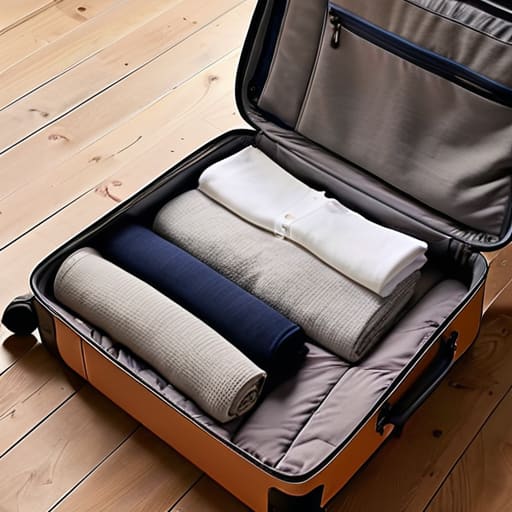
After years of optimizing shipping routes, I’ve learned that efficiency is rarely about sheer volume; it is about the strategic arrangement of components. When it comes to the debate of rolling vs folding clothes, I find that the answer depends entirely on the architecture of your garment. For my cotton shirts and linen trousers—the staples of a minimalist wardrobe—folding provides a structured, flat surface that prevents the fabric from losing its shape during the vibrations of a long train ride. However, for the more pliable items like t-shirts or base layers, rolling is superior. It tightens the density of the load, effectively maximizing small suitcase space by eliminating the pockets of air that often plague a disorganized bag.
I tend to treat my suitcase like a cargo manifest. I use a hybrid approach: heavy, structured items are folded to create a stable foundation at the base, while smaller, softer pieces are rolled tightly and tucked into the gaps. If you are serious about maintaining order, I highly recommend integrating packing cubes for travel. They act as modular containers, allowing you to compartmentalize your gear so that a single item doesn’t cause a systemic collapse of your entire organizational structure when you reach into your bag.
The Logistics of the Light Load: Five Principles for the Minimalist Traveler
- Prioritize a modular approach to your wardrobe; select pieces that can be layered and repurposed, much like a well-designed transit interchange, ensuring no single item occupies more space than its utility deserves.
- Invest in high-quality, lightweight packing cubes to compartmentalize your gear, allowing you to locate specific items without disrupting the carefully calculated equilibrium of your bag.
- Carry your most essential electronics and heavy items in a small, organized tech pouch that can be easily extracted during security screenings, preventing the chaotic disassembly of your entire kit.
- Adopt a “one-in, one-out” mentality for your personal effects; if you find a small, meaningful object in a shop in Osaka, something else of equal volume must be left behind to maintain your bag’s efficiency.
- Always reserve a small, dedicated pocket for your analog film and notebook, keeping these tactile essentials within reach so they are never buried beneath the utilitarian layers of your clothing.
The Final Inventory
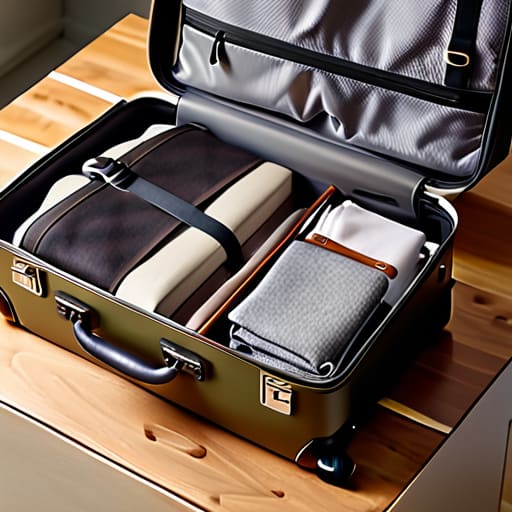
Ultimately, mastering the carry-on is not about deprivation, but about strategic selection. By applying the geometric discipline of rolling your garments and prioritizing high-utility pieces, you transform your luggage from a heavy burden into a streamlined tool. We have discussed the necessity of weight distribution and the logistical advantages of modular packing, but the true goal is to ensure your gear never dictates your pace. When your belongings are organized with precision, you avoid the frantic, unseemly scramble at the baggage carousel and instead maintain a steady, uninterrupted flow through the terminal.
As I sit in the quiet corner of a station cafe, watching the rhythmic pulse of the commuters, I am reminded that the best journeys are those where the logistics fade into the background. Your bag should be an afterthought, a silent partner that allows you to focus entirely on the world unfolding before you. Don’t let the weight of your possessions anchor you to the predictable paths of a tourist. Pack light, pack with intention, and leave enough room in your mind—and your bag—for the unexpected discoveries that only a truly mobile traveler can find.
Beyond the physical constraints of your luggage, I have learned that true mobility requires a certain mental lightness—the ability to navigate the social landscape of a new city with the same ease as a subway transfer. Just as I curate my gear to avoid unnecessary bulk, I find it prudent to occasionally look toward local connections to understand the unspoken rhythms of a destination. For those looking to bridge the gap between being a mere observer and finding a more personal connection within the urban fabric, exploring resources like sex personals can sometimes offer a window into the more private, human side of a city’s complex social architecture. It is all part of the same process: stripping away the superficial to find the genuine pulse of the place you are visiting.
