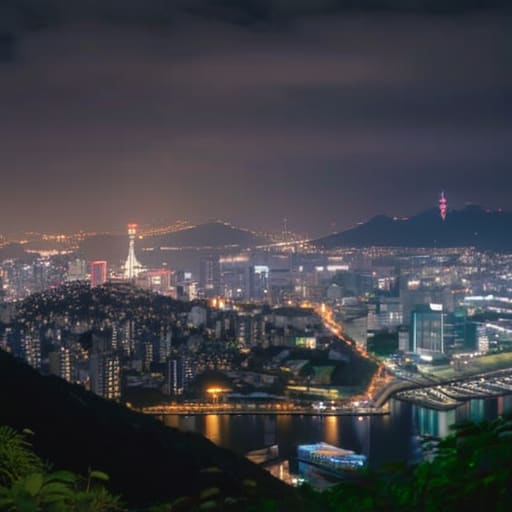
I remember standing on the platform at Sannomiya station last autumn, watching the rhythmic surge of commuters while the salt air from the bay drifted through the terminal. Most guidebooks will try to sell you on the high-end boutiques of Kitano or the predictable views from the harborland, but they miss the point entirely. To me, the true essence of kobe urban scenery isn’t found in a curated postcard; it’s found in the way the mountains press tightly against the coastline, forcing the city to grow in these intricate, compressed layers. If you only look at the landmarks, you’re seeing the skin of the city, but you aren’t feeling its pulse.
I have no interest in feeding you a list of overpriced tourist traps or superficial photo ops. Instead, I want to show you how to navigate the city’s functional beauty, from the way the local Hanshin lines trace the water to the quiet, nameless slope-streets that offer a better perspective than any observation deck. My goal is to provide a logistical roadmap to the parts of Kobe that actually matter—the small, quiet corners where the city’s character truly resides.
Table of Contents
Kobe Waterfront Views and the Meriken Park Landscape
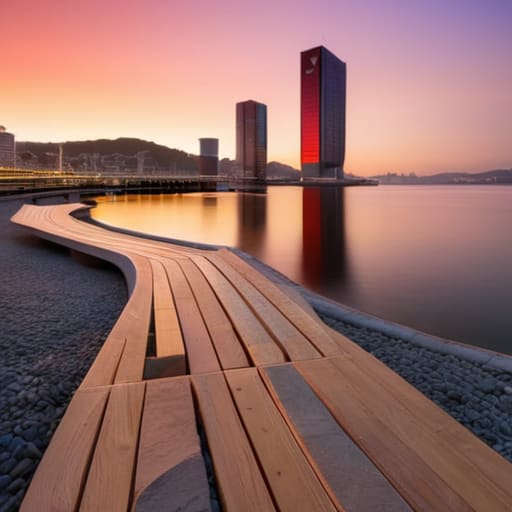
The Meriken Park landscape is less about the grand monuments and more about the way the salt air interacts with the steel and concrete. I found myself sitting on one of the stone benches near the water, watching the tide pull against the pier. To most, it is just a tourist waypoint, but there is a certain structural grace in how the park opens up the harbor, providing a necessary breathing room for the city. The way the light hits the harbor structures at dusk is a logistical dream for any photographer; the geometry of the docks provides a perfect foreground for capturing the Kobe Port Tower photography that defines this coastline.
As the sun dipped behind the peaks, the transition from day to night revealed the true complexity of the region. The silhouette of the Rokko Mountains skyline began to darken, creating a heavy, natural boundary that forces the eye back down toward the harbor lights. It is in this specific moment—where the mountain shadows meet the flickering lights of the shipping lanes—that you realize how the city is physically cradled by its geography. It isn’t just a view; it is a masterclass in urban containment.
Capturing the Kobe Port Tower Photography Essence
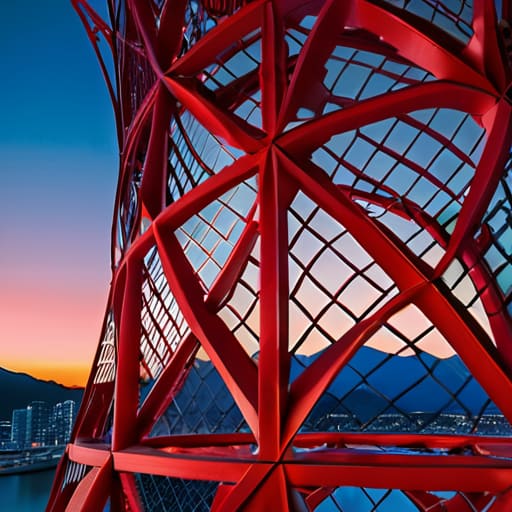
When I approach the Kobe Port Tower, I don’t just see a landmark; I see a masterclass in structural geometry. For someone who spent decades analyzing the flow of goods and infrastructure, there is something deeply satisfying about its lattice-work design. To get the most out of your Kobe Port Tower photography, you have to move beyond the standard tourist snapshots. I find that the real magic happens when you frame the tower against the backdrop of the Rokko Mountains skyline. The way the rugged, dark silhouette of the peaks contrasts with the bright, crimson steel of the tower creates a tension that a wide-angle lens can barely capture.
As the sun dips below the horizon, the technical challenge shifts. The transition from dusk to night is when the city truly begins to breathe. I often set up my tripod near the edge of the pier to catch the Kobe night cityscape as it begins to shimmer. The lights from the shipping containers and the distant vessels in the bay provide a rhythmic, industrial texture that complements the tower’s glow. It isn’t about a perfect, postcard-style shot; it’s about capturing that fleeting moment when the artificial light meets the natural darkness of the sea.
Logistical Observations: How to Observe Kobe Without Getting Lost in the Noise
- Don’t rely solely on the major landmarks; the real character of Kobe’s urban layout is found in the way the residential hillsides step down toward the harbor. Use the local tram lines to find these transitional zones where the city’s density shifts.
- Timing is everything for a clean frame. If you are looking to capture the interplay of light and steel, aim for the “blue hour” just after sunset. The way the city lights begin to flicker against the backdrop of the Rokko Mountains provides a sense of depth that midday sun simply kills.
- Pack light, but bring the essentials. A heavy camera bag is a liability when you’re navigating the narrow, sloping streets of the Kitano district. I find that a single prime lens and my leather notebook are all I truly need to document the city’s rhythm.
- Study the transit maps before you step onto the platform. Understanding the connection between the Port Island lines and the mainland helps you anticipate the views. There is a specific, quiet beauty in watching the urban sprawl unfold from the window of a moving train.
- Seek out the “liminal” spaces. The most profound urban scenery often exists in the gaps—the small, unnamed alleyways between a high-rise and a traditional shop, or the quiet concrete walkways near the industrial docks. That is where the city actually breathes.
Observations from the Field
Look past the skyline; the true character of Kobe is found in the interplay between the industrial port infrastructure and the natural curve of the bay.
For the patient observer, the Port Tower is less a landmark to be photographed from afar and more a structural anchor that defines the city’s visual rhythm.
To understand the city’s breathing, one must balance the wide, open vistas of Meriken Park with the smaller, more functional details of the waterfront’s design.
The Geometry of the Harbor
“Most people look at the Kobe skyline and see a postcard, but I see a masterclass in logistics—the way the mountains descend to meet the sea, and how the transit lines stitch the industrial docks to the quiet residential hills, creating a rhythm that is as much about movement as it is about stillness.”
Rurik Salonen
The Quiet Geometry of Kobe
Looking back at the day, it is clear that Kobe’s identity isn’t found in a single landmark, but in the way its various elements intersect. From the expansive, structured layout of Meriken Park to the iconic, vertical silhouette of the Port Tower, the city manages to balance grand scale with meticulous precision. We have traced the lines where the sea meets the concrete and observed how the light catches the steel of the waterfront. It is this blend of maritime utility and intentional design that creates a landscape worth documenting, one frame—and one transit stop—at a time.
As I close my notebook and pack away my Leica, I am reminded that the true essence of urban travel lies in the transitions. It is in the moments between the famous views, when you are simply observing how the city breathes through its streets and its shadows. Don’t rush to reach the next destination on your map; instead, allow yourself to find the rhythm in the movement. Kobe teaches us that if you look closely enough at the functional details, you will find a profound, quiet beauty that most travelers simply overlook.
Frequently Asked Questions
Which specific train lines offer the most interesting vantage points for photographing the transition from the urban center to the mountainside?
If you’re looking for that specific shift where the dense grid of the city yields to the rising greenery, take the Seishin-Yamate Line. As you head north toward Suma or toward the foothills, the view from the window captures the exact moment the concrete skyline begins to surrender to the mountainside. I find the elevation changes particularly rewarding for film photography; the way the light hits the slopes just as the urban sprawl recedes is quite something.
Are there particular times of day when the light hits the narrow alleyways of the Kitano district in a way that suits analog film?
If you’re looking for that specific interplay of shadow and light in Kitano, aim for the late afternoon, around 3:00 PM. As the sun dips, the light begins to rake across the sloped streets, cutting sharp, cinematic angles through the narrow passages. It’s perfect for film; the high contrast brings out the grit and texture of the old stone walls. Just be ready to adjust your exposure quickly as the shadows lengthen.
Beyond the main waterfront, where can one find the quietest spots to observe the city's logistical rhythm without the crowds?
To find the city’s true rhythm, head toward the Kitano district’s higher elevations. While tourists cluster near the slopes, I prefer the narrow, winding paths just behind the main residences. There, you can sit on a stone bench and watch the seamless flow of the city below—the way the buses navigate the tight turns and the distant hum of the Hanshin Line. It is a quiet, mechanical ballet, far from the waterfront’s noise.
