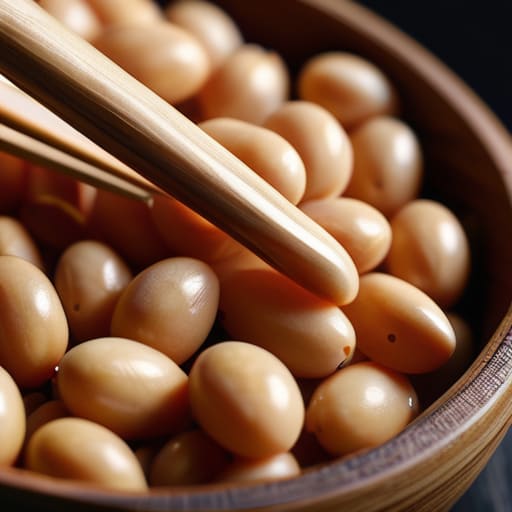
I remember sitting in a cramped, fluorescent-lit izakaya near Shinjuku Station, watching a salaryman methodically stir a small bowl of natto fermented beans with a rhythmic, almost meditative precision. The scent—pungent, sharp, and unapologetically earthy—hit me before the steam even rose from his rice. Most travel guides will try to sell you on the “exotic health benefits” or paint it as a culinary dare for the brave, but that misses the point entirely. To me, that smell wasn’t a challenge; it was the unvarnished scent of a functioning city, a sensory anchor in the middle of the urban rush.
I have no interest in romanticizing this food or feeding you marketing fluff about “superfoods.” Instead, I want to talk about the reality of integrating natto fermented beans into a practical, daily life. I’ll share what I’ve learned from years of observing local morning routines and navigating the aisles of neighborhood supermarkets, from the proper texture to the best ways to manage that unmistakable aroma. If you want the truth about how this staple actually works in the real world, you’ve come to the right place.
Table of Contents
- Unlocking the Nattokinase Health Benefits Within
- The Bacillus Subtilis Nutrition in Every Thread
- The Logistics of Flavor: Five Practical Ways to Integrate Natto into Your Routine
- The Essence of the Fermentation Process
- The Unvarnished Truth in a Sticky Bowl
- The Quiet Persistence of the Bean
- Frequently Asked Questions
Unlocking the Nattokinase Health Benefits Within
While sitting in a small, wood-paneled eatery in Osaka, I found myself reflecting on why this particular dish remains a staple despite its polarizing nature. It isn’t just about the flavor profile; it’s about the chemistry. The real magic lies in the enzyme produced during the fermentation process. I’ve become increasingly fascinated by nattokinase health benefits, specifically how this enzyme acts as a natural way to support cardiovascular circulation. For someone who spent decades sitting in pressurized cabins and high-stress boardrooms, understanding these biological nuances feels less like nutrition and more like a study in structural integrity.
It is a delicate balance of Bacillus subtilis nutrition and tradition. The bacteria responsible for the fermentation don’t just transform the bean; they create a complex biological environment that serves as a cornerstone of traditional Japanese fermented foods. When you look past the initial hesitation caused by the natto texture and smell, you realize you are consuming a highly functional, living food. It is a quiet, potent strength hidden within a simple bowl, much like the efficient, unseen machinery that keeps the Tokyo subway running on time.
The Bacillus Subtilis Nutrition in Every Thread
I sat in a small, steam-filled izakaya near Umeda, watching the chef carefully prepare a bowl, and it struck me how much of the magic lies in the invisible. We often focus on the flavor, but the real engine of this dish is the Bacillus subtilis bacteria. It isn’t just a byproduct of the process; it is the very architect of the bean’s transformation. This specific strain of bacteria is what drives the Bacillus subtilis nutrition profile, breaking down complex proteins into something far more bioavailable and potent than a simple boiled soybean could ever hope to be.
As I sketched the layout of the kitchen in my notebook, I realized that the characteristic strings—that unmistakable, viscous pull—are a physical manifestation of this microbial work. While many newcomers struggle with the natto texture and smell, I see those threads as a sign of a living, breathing food. It is a reminder that traditional Japanese fermented foods are not static products on a shelf, but active, evolving systems of nourishment that require a certain level of respect to truly appreciate.
The Logistics of Flavor: Five Practical Ways to Integrate Natto into Your Routine
- Don’t fight the texture; embrace the aeration. I’ve learned that the more vigorously you whip the beans with your chopsticks before adding toppings, the creamier the consistency becomes, transforming that stubborn stickiness into a silkier, more manageable emulsion.
- Neutralize the pungency with acidity. If the fermented aroma feels too aggressive for your palate, a small splash of high-quality rice vinegar or a squeeze of fresh citrus acts as a structural counterbalance, cutting through the heavy richness of the beans.
- Utilize the “base layer” method. To make the transition easier, treat natto as a functional component rather than a standalone dish; folding it into a warm bowl of seasoned rice or mixing it into a savory miso soup allows the heat to mellow the scent while retaining the nutritional integrity.
- Build a flavor profile with textural contrasts. The monotony of the soft beans is broken when you introduce something crisp—finely sliced scallions, toasted nori strips, or even a bit of crushed kimchi provide the necessary sensory friction to make each bite interesting.
- Respect the temperature. While I often find it most palatable when incorporated into warm grains, avoid boiling the natto directly in a pot; excessive heat can degrade the very enzymes you are seeking to consume, much like mismanaging a delicate shipment in a high-heat environment.
The Essence of the Fermentation Process
Beyond the polarizing scent and texture, natto represents a masterclass in functional nutrition, where the breakdown of proteins by Bacillus subtilis creates a unique biological profile.
The real value lies in the microscopic details—specifically the nattokinase enzyme—which offers a direct, systemic way to support cardiovascular health that most modern diets overlook.
To truly appreciate natto is to look past the surface-level discomfort and recognize it as a vital, living component of a balanced, traditional lifestyle.
The Unvarnished Truth in a Sticky Bowl
To the uninitiated, the pungent scent and the stubborn, silken threads of natto might seem like an obstacle to overcome, but to me, it represents the city itself: complex, unapologetic, and possessing a deep, functional vitality that reveals its true worth only to those willing to sit with it in the quiet.
Rurik Salonen
The Quiet Persistence of the Bean
As I sit here in a small, dimly lit izakaya near Shinjuku station, watching the steam rise from a simple bowl of natto, the logistical complexity of this food becomes clear. It is not merely a meal; it is a finely tuned biological process. We have looked at how the nattokinase works to support cardiovascular health and how the Bacillus subtilis provides a nutritional density that few modern processed foods can match. To understand natto is to understand the delicate balance between fermentation and function, a synergy that turns a humble soybean into a powerhouse of longevity. It is a testament to how much vitality can be packed into such a small, unassuming package.
In my years of managing global networks, I learned that the most reliable systems are often the ones that operate beneath the surface, unnoticed by the masses. Natto is much the same. It doesn’t demand your attention with bright packaging or flashy marketing; it simply exists, performing its vital work with a steady, unpretentious grace. As you navigate the bustling streets of Tokyo or the crowded alleys of Osaka, I encourage you to look for these small, fermented truths. Sometimes, the most profound lessons in health and history aren’t found in the grand monuments, but in the quiet, sticky rhythm of a single bowl shared in a corner of the city.
Frequently Asked Questions
How can I find a decent, approachable brand of natto if the texture and smell of the traditional versions feel a bit too overwhelming at first?
If the traditional pungency feels like too much of a logistical hurdle, look for “Haku” or “Kin” brands in the supermarket aisles—they often favor a milder profile. I’ve found that choosing a “flavored” natto, such as those pre-mixed with takuan (pickled radish) or a light soy sauce, acts as a buffer for the senses. It provides a more predictable entry point into the texture without the overwhelming aroma of the raw ferment.
Are there specific ways to prepare or cook the beans that might mellow out that sharp, fermented scent without losing the nutritional value?
The trick, I’ve found, is in the layering. I rarely eat it plain. If you stir in a bit of hot mustard or a dash of soy sauce, the sharp acidity softens without compromising the enzymes. I often fold it into warm rice or whisk it into a miso soup just as the heat is dying down. This preserves the delicate probiotics while letting the savory, nutty undertones take center stage over that initial pungent punch.
When I'm navigating local supermarkets in Tokyo, what are the subtle visual cues that distinguish a high-quality batch from one that's past its prime?
I’ve learned to look past the bright labels. When I’m scanning the shelves in a neighborhood supermarket, I look for the clarity of the liquid. A high-quality batch should have a clean, translucent sheen to the viscous threads; if the liquid looks cloudy or overly grey, it’s likely losing its vitality. I also check the beans themselves—they should be plump and distinct, not mushy or breaking down into a singular, dark mass.
