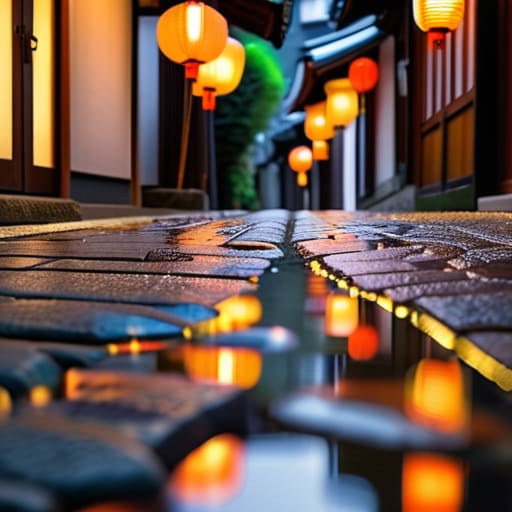
I was standing on the platform at Shinjuku Station last Tuesday, watching a sea of commuters move with the precision of a well-oiled machine, and it hit me: most people approach japan urban walking as if they are merely trying to survive a gauntlet. They treat the city like an obstacle course to be conquered, rushing from one neon-soaked landmark to the next, breathless and utterly disconnected. They see the crowds, but they miss the connective tissue—the way a sudden turn down a side street in Setagaya can instantly mute the roar of the metropolis into a gentle hum of bicycle bells and sliding wooden doors.
I have no interest in giving you a list of the most “Instagrammable” intersections or the most crowded shopping districts. Instead, I want to show you how to read the city like a map. My goal is to provide you with a practical, logistical framework for navigating these dense environments, focusing on the transit rhythms and the quiet, functional corners that define the true character of the streets. We aren’t just going for a stroll; we are learning how to truly see the way these cities breathe.
Table of Contents
Tokyo Pedestrian Navigation and the Flow of the Crowd
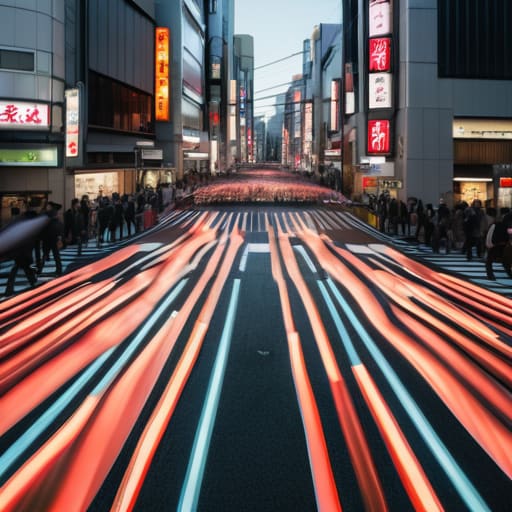
To master tokyo pedestrian navigation, one must first accept that you are not merely a traveler, but a single component in a massive, living machine. In my years of logistics, I learned that efficiency isn’t about speed; it’s about the absence of friction. The same applies to the sidewalks of Shinjuku or Ginza. There is a silent, unspoken choreography at play—a collective agreement to maintain a steady pace and respect the personal space of the stranger beside you. When you stop abruptly to check a map, you become a pebble in a stream, causing a momentary ripple of confusion. I’ve found that the most rewarding way to experience these Japanese city streetscapes is to adopt the local tempo, moving with purpose rather than fighting against the current.
Once you stop resisting the flow, the chaos begins to resolve into a predictable pattern. You start to notice the subtle cues: the way the crowd thins near a small shrine, or how the heavy footfall of commuters shifts as they approach the station gates. It is in these moments of structured movement that the city truly reveals its logic.
Finding Stillness in Japanese City Streetscapes
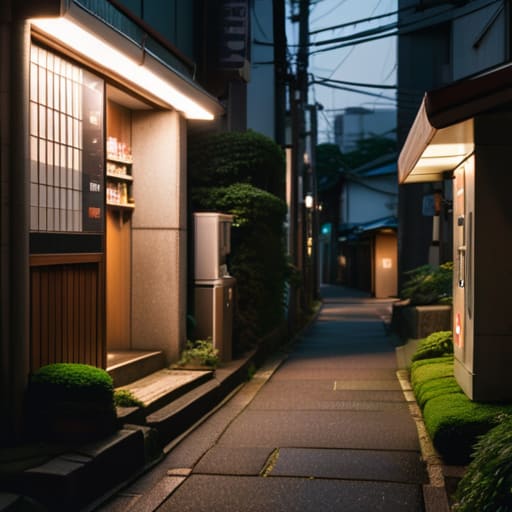
There is a specific kind of silence that exists only in the middle of a metropolis. It isn’t the absence of sound, but rather a shift in frequency. As I move away from the primary arteries of the city, the roar of the Yamanote line fades into a rhythmic hum, and the japanese city streetscapes begin to reveal their true character. I often find myself stepping into narrow residential lanes where the air feels cooler and the concrete seems to hold the history of the neighborhood. Here, the frantic energy of the business districts is replaced by the soft scrape of a broom on a doorstep or the muffled chime of a distant temple bell.
To truly master the art of urban exploration in Japan, one must learn to look for these pockets of stasis. I find that if I stop focusing on the destination and instead observe the way light hits a weathered wooden gate or how a small shrine is tucked between two vending machines, the city stops feeling like a machine and starts feeling like a living organism. These are the moments where the chaos of the crowd dissolves, leaving only the quiet, functional beauty of a world perfectly in balance.
Practical Logistics for the Observant Wanderer
- Master the exit numbers before you even touch the platform. In massive hubs like Shinjuku or Umeda, the difference between a seamless stroll and a forty-minute detour is knowing exactly which numbered exit aligns with your intended direction.
- Carry a physical map or a dedicated notebook for sketching. While digital tools are efficient, they create a barrier between you and your surroundings; there is a specific kind of spatial awareness you only gain when you are forced to orient yourself manually.
- Respect the unspoken choreography of the sidewalk. Japanese urban walking is a lesson in non-verbal communication; observe the flow of the crowd and move with the current rather than against it to avoid breaking the city’s natural rhythm.
- Invest in footwear that prioritizes structural support over aesthetics. You aren’t just walking; you are navigating complex multi-level terrains, stairs, and long stretches of concrete that demand more from your feet than a casual stroll.
- Use the “micro-break” strategy. Instead of pushing through a long trek, find a small, local vending machine or a tiny corner cafe to pause. These brief moments of stillness allow you to recalibrate your senses before diving back into the metropolitan flow.
Lessons from the Pavement
Prioritize the transit map over the tourist brochure; understanding the artery of a city tells you more about its lifeblood than any landmark ever could.
Learn to read the silence between the noise; the true character of a Japanese metropolis is often found in the small, unmapped gaps between the high-rise districts.
Observe the logistics of the everyday; watching how a crowd moves through a station or how a narrow alley functions is the quickest way to respect the rhythm of the local environment.
The Geometry of the Sidewalk
Most people see a crowded sidewalk as an obstacle to be bypassed, but if you watch closely, there is a silent, mathematical grace to it—a way the crowd breathes and shifts around a single stationary figure, as if the city itself is adjusting its stride to accommodate your presence.
Rurik Salonen
The Final Detour
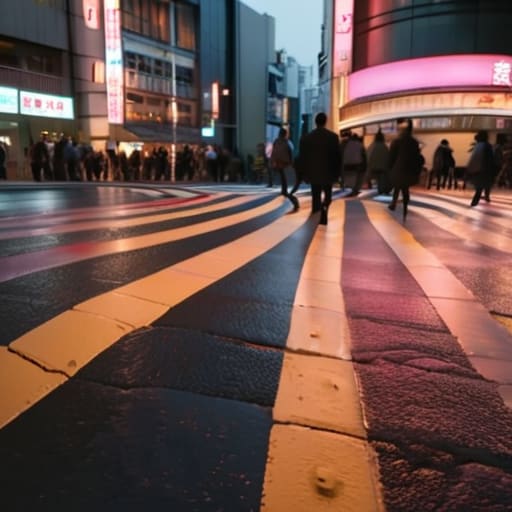
To walk through a Japanese metropolis is to engage in a continuous study of logistics and grace. We have looked at how the massive, synchronized flow of Tokyo’s crowds functions with a precision that would make any supply chain manager envious, and how the deliberate stillness of a side street offers a necessary counterweight to that momentum. It isn’t enough to simply move from point A to point B; you must learn to read the unspoken choreography of the sidewalk and respect the quiet boundaries that keep these dense urban environments from collapsing into chaos. When you stop viewing the city as a series of obstacles and start seeing it as a living, breathing organism, the entire experience shifts.
As I close my notebook and prepare for my next transit connection, I am reminded that the most profound discoveries rarely happen at the summit of a landmark or under the glare of a tourist attraction. They happen in the pauses—the moment a train pulls away from a platform, or the way light hits a narrow alleyway at dusk. Don’t be afraid to get lost in the grid, to deviate from the digital maps, and to let your feet lead you toward the unmapped corners. After all, the true essence of a place is never found in its grandest monuments, but in the quiet, functional details that most people are too busy to notice.
Frequently Asked Questions
How do I effectively manage my pace and navigation when moving between the massive, multi-level transit hubs and the smaller, more intimate side streets?
The key is to treat the transition like a shift in gears. When you’re inside a hub like Shinjuku, adopt a logistical mindset: move with purpose, follow the flow, and don’t fight the tide. But once you step into those narrow side streets, you must consciously downshift. Put the phone away, slow your stride, and let your eyes drift upward. Navigation isn’t just about the destination; it’s about adjusting your tempo to match the environment.
What are the best ways to capture the quiet, functional details of the city through film photography without disrupting the natural flow of the crowds?
I’ve found that the secret lies in patience and a bit of logistical foresight. Don’t chase the movement; wait for it to pass you by. Set your tripod-less stance early, find a pocket of stillness near a transit entrance or a shadowed doorway, and let the city come to your frame. Use a wider lens to minimize the need for intrusive adjustments. If you act like a part of the architecture, the crowd will simply flow around you, oblivious.
Beyond the major metropolitan areas, how does the logistical rhythm of urban walking change when transitioning into smaller, more traditional Japanese towns?
In the sprawl of Tokyo, you learn to navigate by the collective momentum of the crowd. But as you move into smaller towns, that frantic, synchronized pulse softens into something more granular. The logistical scale shifts from massive transit hubs to the predictable cadence of a single bus line or a well-worn walking path. Here, the rhythm isn’t dictated by efficiency alone, but by the geography of the landscape and the quiet, steady pace of local life.
