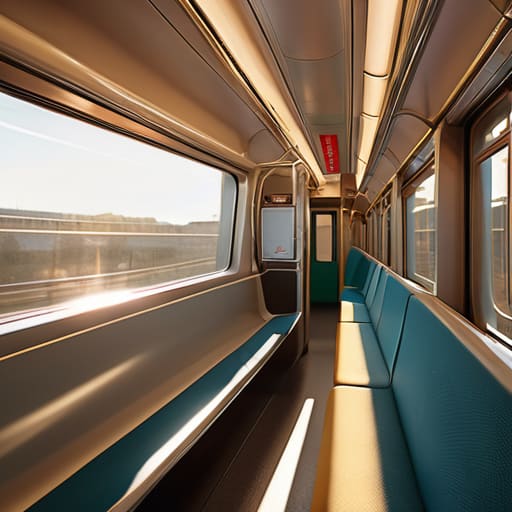
I remember sitting on the Yamanote Line during a humid July afternoon, my leather notebook resting on my lap, watching a sea of commuters move in a choreographed, near-silent ballet. Most guidebooks will tell you that train etiquette in Japan is a rigid set of complex rules designed to punish the uninitiated, but they’ve got it entirely wrong. It isn’t about following a manual of prohibitions; it’s about recognizing the unspoken social contract that keeps a city of millions from collapsing into total friction. When you stop viewing these rules as restrictions and start seeing them as the grease in a massive, beautiful machine, the entire experience of traveling through Tokyo changes.
I’m not here to give you a list of “don’ts” that sounds like it was pulled from a dry government pamphlet. Instead, I want to share what I’ve learned from years of observing these transit arteries from the inside. I will provide you with the practical, ground-level realities of navigating Japanese rails—the subtle cues, the spatial awareness, and the quiet logic that makes the system work. My goal is to help you move through these spaces not as a disruptive tourist, but as a composed observer of the city’s rhythm.
Table of Contents
- The Unspoken Code of Mobile Phone Usage on Japanese Public Transport
- Mastering Etiquette for Riding Crowded Trains in Japan
- The Subtle Nuances: Five Observations from the Platform
- The Essentials of the Commuter’s Code
- ## The Geometry of Shared Space
- The Quiet Art of Moving Together
- Frequently Asked Questions
The Unspoken Code of Mobile Phone Usage on Japanese Public Transport

There is a specific, heavy stillness that settles over a carriage when the train enters a densely populated zone. It isn’t just a lack of noise; it’s a collective agreement to maintain a private bubble within a public space. When it comes to mobile phone usage on Japanese public transport, the rule is simple yet absolute: your device should be a silent companion, never a source of disruption. I’ve spent many afternoons watching commuters, their faces illuminated by the soft glow of screens, but you will rarely hear a ringtone or the tinny leak of a video playing.
If you must take a call—perhaps an urgent matter that cannot wait—you’ll notice most people step off the train at the next station to handle it. Even then, the expectation is to keep the conversation brief and hushed. On the more long-distance routes, such as when observing shinkansen passenger etiquette, the atmosphere shifts slightly toward comfort, yet the core principle remains. The goal is to avoid imposing your digital life onto the person sitting next to you. In the delicate ecosystem of a moving train, silence is the most respectful gift you can offer a stranger.
Mastering Etiquette for Riding Crowded Trains in Japan
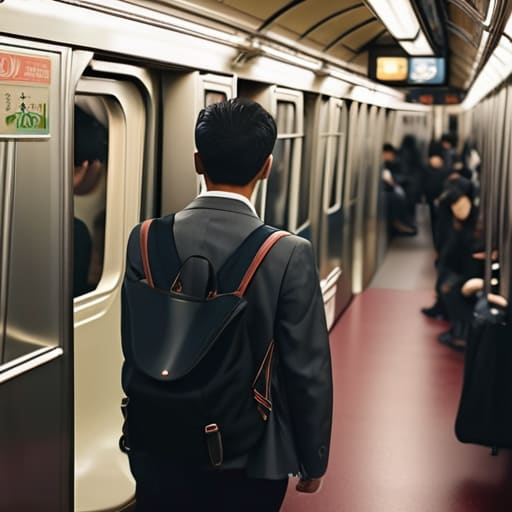
When the morning rush hits Shinjuku or Umeda, the sheer volume of people can feel overwhelming to the uninitiated. However, I’ve found that there is a precise, almost mathematical grace to how passengers navigate these tight spaces. The most important thing to remember regarding backpack etiquette on Japanese subways is to keep your belongings in front of you or placed on the overhead racks. When you are packed shoulder-to-shoulder, a bag swinging behind you isn’t just a nuisance; it’s a disruption to the physical flow of the carriage.
I often sit with my notebook, watching how seasoned commuters instinctively minimize their footprint. It isn’t just about physical space, but about the respect for personal boundaries. This extends to the priority seating areas, where even if the train is packed, there is a silent understanding to leave those seats vacant for those who truly need them. Mastering etiquette for riding crowded trains in Japan means recognizing that you are part of a moving machine. If you can manage your gear and your presence, you stop being an obstacle and start becoming part of the city’s seamless, rhythmic pulse.
The Subtle Nuances: Five Observations from the Platform
- Respect the threshold of the boarding area. I’ve noticed that most people naturally form orderly lines at the markings on the platform; resist the urge to crowd the doors before the train has fully come to a halt. It’s a small logistical courtesy that keeps the flow of the station from turning into a bottleneck.
- Mind your physical footprint. In the confined space of a commuter carriage, your belongings—be it a large backpack or a heavy camera bag—become part of the shared environment. I make it a habit to hold my bag at my feet or in front of me to ensure I’m not encroaching on someone else’s personal space.
- Observe the hierarchy of seating. While the priority seats are clearly marked, the real etiquette lies in being observant of those around you. If you see an elderly passenger or someone with limited mobility approaching, offering your seat isn’t just a rule; it’s a fundamental part of the city’s social fabric.
- Manage your auditory presence. Beyond just phone calls, this applies to the small sounds of travel. The rustle of a heavy plastic bag or the constant clicking of a mechanical device can feel amplified in a silent car. I try to move with a certain deliberate stillness to minimize my impact on the collective quiet.
- Treat the transit staff with quiet professionalism. The conductors and station attendants are the unsung architects of this entire system. A simple, respectful nod as they pass or a brief, polite word when asking for directions goes a long way in acknowledging the immense complexity they manage every single day.
The Essentials of the Commuter’s Code
Respect the silence; your phone should remain a tool for information, not a source of noise that disrupts the collective calm of the carriage.
Mind your physical footprint; in the tight quarters of a rush-hour train, being aware of your bag, your elbows, and your personal space is the highest form of courtesy.
Observe before you act; every line and every station has its own subtle rhythm, so take a moment to watch how the locals move before you attempt to navigate the flow.
## The Geometry of Shared Space
“In my years of managing logistics, I learned that any system, no matter how complex, relies on the invisible respect of its individual parts; on a Tokyo commuter train, that respect isn’t found in a rulebook, but in the quiet, disciplined way a stranger yields their space to the rhythm of the collective.”
Rurik Salonen
The Quiet Art of Moving Together
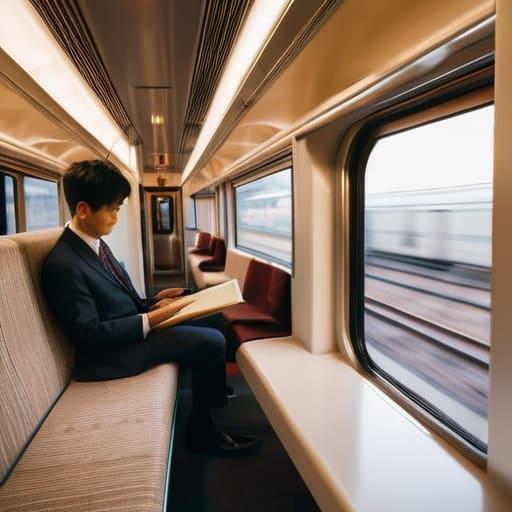
Ultimately, navigating the Japanese rail system is less about memorizing a list of rigid prohibitions and more about recognizing a shared responsibility. Whether it is the discipline of keeping your phone on silent, the spatial awareness required to manage your belongings in a crowded car, or the simple grace of yielding your seat, these actions form a collective pact. When we respect the unspoken boundaries of our fellow commuters, we ensure that the entire network functions with the precision and fluidity that makes Japanese transit a marvel of the modern world. It is a delicate, logistical dance that relies on every single participant to honor the silence and maintain the flow.
As I sit by the window of a local line, watching the urban landscape blur into a smear of neon and concrete, I am reminded that these rules aren’t meant to restrict us. Instead, they are the invisible threads that hold the chaos of the metropolis together. To master train etiquette is to move beyond being a mere spectator and to become a part of the city’s breathing rhythm. If you approach your journey with mindful observation rather than mere instruction, you will find that the most profound way to experience Japan is not through the sights you see, but through the respectful stillness you carry with you.
Frequently Asked Questions
How should I handle it if my luggage or backpack becomes an obstacle in a crowded carriage?
When the carriage tightens and space becomes a premium, your gear shouldn’t be an island. If you’re wearing a backpack, take it off. It’s a small concession, but it significantly reduces your footprint and prevents accidental bumps to others. If you’re carrying a larger suitcase, try to position it between your legs or in the designated luggage areas if available. It’s about spatial awareness—minimizing your physical presence to respect the collective flow.
Is it acceptable to eat or drink on local commuter trains, or should I save that for the Shinkansen?
Keep your snacks for the Shinkansen. On local commuter lines, the unspoken rule is simple: avoid eating. There is a certain dignity in the shared silence of a morning commute, and the scent of a convenience store sandwich can feel intrusive in such a confined, quiet space. A quick sip of water or coffee is perfectly fine, but if you’re looking to settle in for a meal, wait until you’ve reached the high-speed rails.
What are the unspoken rules regarding priority seating for the elderly or those with disabilities?
The priority seats—marked clearly by their distinct colors—are more than just designated spots; they are a quiet pact of mutual respect. While you’ll see them often empty during off-peak hours, the rule is simple: they are held in reserve. If someone needing them boards, you vacate your seat without fanfare. There’s no need for a grand gesture or a long apology. Just a small, steady nod of recognition as you step into the aisle.
