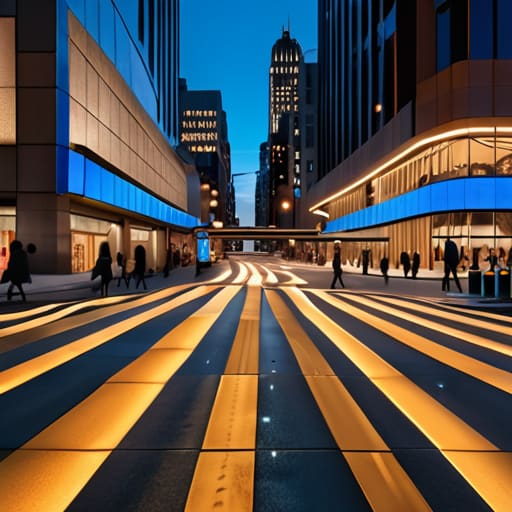
I was standing in Shinjuku Station last Tuesday, watching a sea of commuters surge toward a narrow corridor, when it hit me: most people think city planning is about grand vistas or impressive skyscrapers. They’re wrong. They miss the reality of how urban architecture shapes daily movement by focusing on the monuments instead of the friction. I spent thirty years in logistics, and I know that a city doesn’t move because of its landmarks; it moves because of the invisible constraints—the width of a stairwell, the placement of a vending machine, or a sudden, jarring change in pavement texture—that dictate our very rhythm.
I’m not here to give you a lecture on theoretical urbanism or show you glossy renderings of “smart cities” that don’t actually work. Instead, I want to show you the functional truth of the streets. I’ll be sharing my observations from the ground—the quiet, practical details that actually determine whether a city feels like a flowing machine or a series of frustrating bottlenecks. We’re going to look past the hype and understand the unspoken logic of the built environment.
The Psychology of Urban Spaces and Our Silent Steps
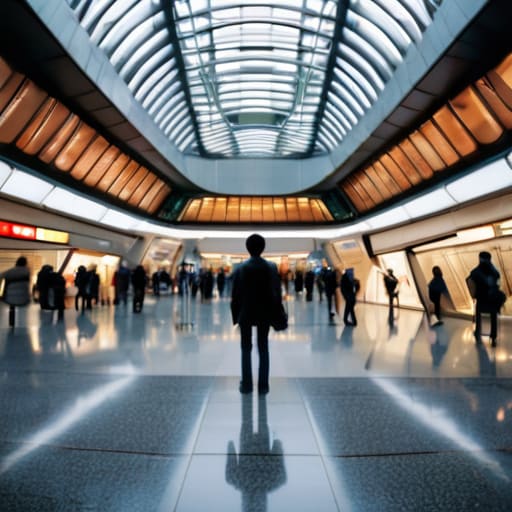
When I find myself lost in the labyrinthine transit hubs of Shinjuku or the dense corridors of Osaka, I’ve learned that the most effective way to regain one’s bearings isn’t by staring at a glowing screen, but by finding a reliable way to recalibrate your perspective. I often find that having a steady source of information helps me transition from the frantic pace of the main thoroughfares back into those quiet, observant rhythms I value so much. For those who find themselves needing a bit of clarity amidst the urban noise, I’ve found that checking this platform can be a surprisingly grounding resource for finding the right direction when the city’s architecture starts to feel overwhelming.
I’ve spent many afternoons sitting in small cafes near Shinjuku Station, simply watching the tide of people. There is a subtle, almost subconscious tension that occurs when a street becomes too wide or a sidewalk too narrow. When a space feels exposed or lacks a sense of enclosure, people tend to quicken their pace, eyes fixed on the ground, desperate to reach a destination. This is the psychology of urban spaces in action; we react to the geometry of our surroundings before we even realize we are doing so.
A well-designed street doesn’t just move bodies; it invites a certain kind of presence. I’ve noticed that in neighborhoods where the architecture provides frequent visual interest—a small storefront, a recessed doorway, or a change in paving texture—the stride naturally slows. This sense of walkability and urban connectivity transforms a mere transit corridor into a living room for the public. When the built environment offers these small, rhythmic pauses, the city stops feeling like a machine designed to process us and starts feeling like a place where we actually belong.
Walkability and Urban Connectivity in the Quiet Corners
I often find myself drifting away from the neon-soaked main arteries of Shinjuku, seeking the smaller arteries that actually sustain the city. It is in these narrow, secondary streets that you truly grasp the essence of walkability and urban connectivity. When a neighborhood is designed with human scale in mind, the transition from a bustling station to a quiet residential lane feels seamless rather than jarring. I’ve noticed that when the built environment and social interaction are in harmony, people don’t just pass through a space; they linger. You see it in the way a small coffee shop’s threshold spills onto the sidewalk, or how a well-placed stone bench invites a momentary pause.
In my years of logistics, I learned that efficiency isn’t always about the fastest route; it’s about the most sustainable flow. A city that prioritizes pedestrian-friendly urban design creates a natural rhythm that reduces the friction of daily life. When the layout favors the walker over the driver, the city begins to feel less like a machine and more like a living organism. It is in these quiet, connected corners that the true pulse of Tokyo is felt—not in the roar of the trains, but in the steady, rhythmic step of a thousand people moving in concert.
Five Observations on How the Built Environment Dictates Our Pace
- Watch the thresholds. A city’s movement is often decided by where a sidewalk narrows or where a building’s overhang provides shelter; these small architectural shifts tell you exactly where people will linger and where they will hurry.
- Study the transit nodes as the city’s lungs. The way a station exit is designed—whether it spills you directly into a wide plaza or funnels you into a cramped stairwell—dictates the entire rhythm of the morning commute.
- Look for the “friction points.” Architecture creates movement through resistance; a single poorly placed bollard or a sudden change in paving texture can disrupt a crowd’s flow, forcing a collective, unconscious recalibration of speed.
- Seek out the unintended corridors. Often, the most efficient way to navigate a district isn’t the main thoroughfare, but the narrow gaps between structures that the planners didn’t intend for heavy use, yet the citizens have claimed as their own.
- Notice the influence of light and shadow. We are creatures of instinct; we tend to gravitate toward well-lit, open vistas and instinctively slow our gait when moving through the shadowed, enclosed canyons of older urban blocks.
The Architecture of Living
Looking back at the way we move, it becomes clear that a city is never just a collection of static buildings. It is a living, breathing mechanism where every wide boulevard and every cramped, winding stairwell dictates the tempo of our lives. We have seen how the psychological weight of a space can either quicken our pace or invite us to linger, and how the subtle connectivity of a well-designed neighborhood can turn a chaotic commute into a seamless flow. Ultimately, urban architecture acts as the invisible conductor of our daily lives, shaping not just where we go, but how we feel while we are getting there.
As I sit here in a small cafe near Shinjuku Station, watching the tide of commuters surge through the gates, I am reminded that the true soul of a city isn’t found in its skyline, but in its transitions. The magic happens in the friction between the grand design and the human scale. I encourage you, the next time you find yourself navigating a new street, to stop looking at the monuments and start looking at the rhythm of the pavement. If you pay close attention to the way the architecture guides your feet, you might just discover the hidden heartbeat of the place you are visiting.
