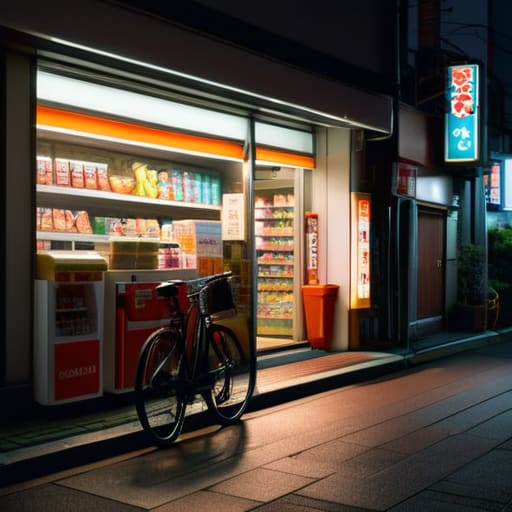
I was standing in the middle of Shinjuku Station last Tuesday, watching a sea of salarymen move with a terrifying, synchronized precision, when I realized I wasn’t hungry for a Michelin-starred meal; I was hungry for something functional. Most travel guides will try to sell you on the “magic” of Japanese convenience stores as if they are culinary shrines, but that’s a romanticized distraction. To me, the true essence of konbini culture isn’t found in the flashy seasonal sweets or the viral TikTok snacks, but in the unseen logistical perfection that allows a city of thirty million to keep breathing through the night.
I’m not here to give you a list of trendy items to photograph for your social media feed. Instead, I want to pull back the curtain on how these small, brightly lit hubs actually serve as the lifeblood of the urban landscape. I will show you how to navigate them like a local, identifying the high-quality staples that actually sustain a person, and understanding the quiet efficiency that makes them indispensable. We aren’t looking for gimmicks; we are looking for the truth in the details.
Table of Contents
Japanese Urban Convenience the Citys Quietest Lifeline
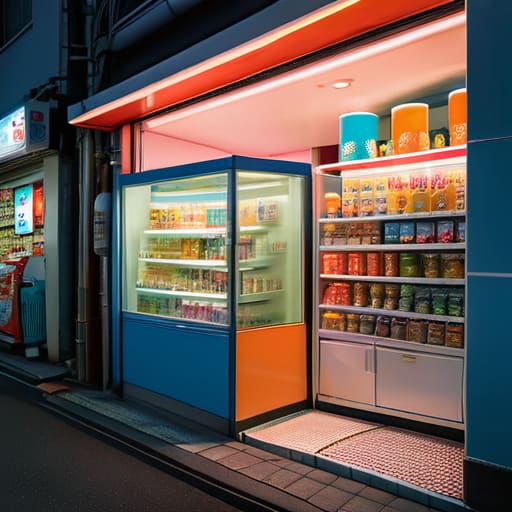
To the uninitiated, a convenience store is merely a place to grab a quick snack. But to someone who has spent decades studying how systems move, I see them as the unseen circulatory system of the Japanese metropolis. They are the nodes that keep the city’s rhythm steady, even when the sun goes down. Whether it is a bright Lawson near Shinjuku Station or a tucked-away FamilyMart in a residential corner of Osaka, these spaces provide a level of Japanese urban convenience that feels almost mathematical in its precision. They are constant, reliable, and essential.
I often find myself standing before the refrigerated cases, less interested in the flashy sweets and more drawn to the logistical perfection of the onigiri and bento selection. There is a quiet dignity in how a simple rice ball is wrapped, designed to be eaten on the move without a single grain falling out of place. Even the seasonal konbini limited editions follow a strict, predictable cycle that mirrors the shifting seasons outside. It isn’t just about food; it is about a seamless integration of service and survival that allows the city to keep breathing, one transaction at a time.
The 24 Hour Service Lifestyle Where the Streets Breathe
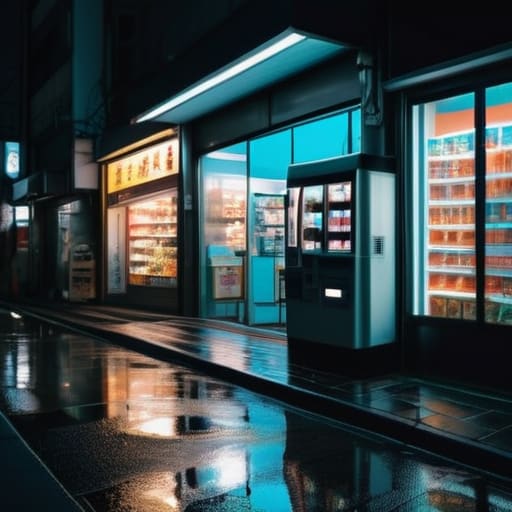
There is a specific kind of rhythm to a city that never truly sleeps, a steady, low-frequency hum that most people ignore. In Tokyo, this rhythm is regulated by the 24-hour service lifestyle that anchors every neighborhood. I’ve often found myself standing outside a brightly lit Lawson or FamilyMart at three in the morning, watching the ebb and flow of the streets. It isn’t just about the convenience of a quick snack; it is about the psychological safety of knowing that no matter how late the logistics of life run, the lights will remain on.
When the rest of the world feels shuttered, the sheer variety within these small footprints is staggering. I recently spent twenty minutes just observing the precision of the onigiri and bento selection being restocked during a shift change. There is a quiet dignity in the way the staff manages the influx of salarymen and late-night travelers alike. It’s a microcosm of the city’s efficiency—a place where the complex machinery of urban life pauses for a moment of predictable, reliable sustenance.
Navigating the Grid: Five Observations for the Discerning Traveler
- Watch the rhythm of the entrance. There is a specific, unspoken choreography to the chime and the sliding doors; don’t rush the flow. Wait for the beep to subside before you approach the counter, much like waiting for a signal change at a busy intersection.
- Look past the bright, branded displays. The true logistical marvels—the seasonal bento boxes and the precisely timed hot snacks—are often tucked in the corners. I’ve found that the best meals are the ones that feel like a quiet necessity rather than a marketing push.
- Master the art of the “point card” question. When the clerk asks about a loyalty card, a simple, polite “nai desu” (I don’t have one) is all you need. It keeps the transaction efficient, maintaining the steady pace that makes these spaces work so well.
- Utilize the multifunctionality. A konbini isn’t just a pantry; it’s a hub. Whether you need to print a document, ship a package, or withdraw yen, treat it as a vital node in your daily transit rather than just a place to grab a quick snack.
- Observe the seasonal shifts. In my notebook, I track how the offerings change with the humidity and the light. A konbini in July feels fundamentally different from one in November. To understand the city’s breath, you must notice what it’s consuming at any given moment.
The Quiet Logic of the Konbini
Beyond mere retail, the konbini serves as a vital node in the city’s logistical network, providing a predictable, functional anchor for the restless urban rhythm.
The true value of these spaces lies in their accessibility; they offer a rare, friction-less sanctuary that allows the city to function smoothly even in the dead of night.
To observe a convenience store is to observe the local pulse, revealing the subtle shifts in a neighborhood’s energy through the simple ebb and flow of its patrons.
The Logistics of Comfort
“To the untrained eye, a konbini is merely a shop, but to those of us who study the flow of a city, it is the vital valve that regulates urban pressure—a small, brightly lit sanctuary that ensures the city’s complex machinery never truly grinds to a halt.”
Rurik Salonen
The Smallest Essential Gear
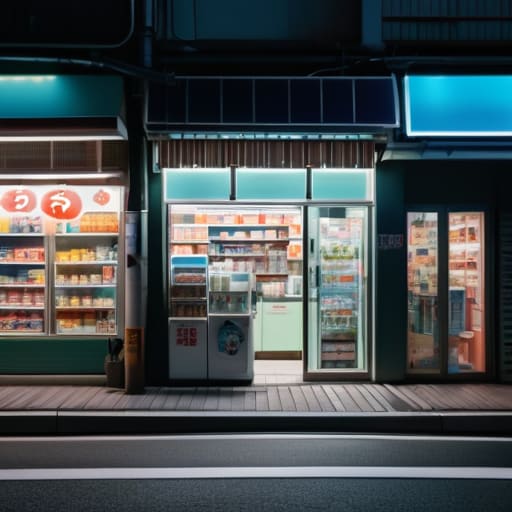
Looking back at the intricate web of convenience we have discussed, it becomes clear that the konbini is far more than just a retail outlet. It is a vital node in the urban logistics of Japan, a reliable constant that stabilizes the frantic pace of Tokyo and Osaka. From the seamless integration of payment services to the way these stores act as unseen anchors for the late-night worker or the early-morning commuter, they provide a sense of structural predictability. They are the connective tissue that allows the city to function without pause, offering a steady rhythm in an otherwise unpredictable metropolitan landscape.
As I sit here, sketching the layout of a nearby intersection in my notebook, I am reminded that we often overlook the most important parts of a journey. We chase the grand vistas and the famous temples, yet we find our true comfort in the small, dependable details. The next time you find yourself navigating a foreign street, don’t just look for the landmarks. Look for the quiet, glowing windows of the corner shop. It is in these modest, functional spaces that you will truly begin to understand how a city breathes.
Frequently Asked Questions
How do the different chains—like 7-Eleven, Lawson, and FamilyMart—actually differ in terms of their specific food offerings or atmosphere?
To the untrained eye, they are identical. But once you watch the patterns, the distinctions emerge. I’ve found 7-Eleven to be the most reliable for high-quality, consistent staples—their coffee and egg sandwiches are logistical triumphs of freshness. Lawson feels a bit more indulgent, a go-to for those late-night sweet cravings or specialized desserts. FamilyMart, however, has a certain grit to it; their fried chicken is the quintessential companion for a quick meal on a subway platform.
Is it practical to rely on konbini for daily meals, or does that eventually strip away the experience of authentic local dining?
It’s a logistical trade-off. If you treat the konbini as your primary pantry, you’ll certainly master the art of efficiency, but you’ll miss the seasoning of the city. I use them for tactical fuel—a quick onigiri between subway transfers—but I make it a rule to seek out a small, steam-filled ramen shop or a neighborhood izakaya for my main meals. Convenience is a tool; don’t let it become a substitute for discovery.
How do these stores manage to maintain such high levels of logistical precision and product freshness in high-density urban areas?
It comes down to a relentless, synchronized dance of micro-logistics. These stores don’t rely on massive, infrequent deliveries; they live by a high-frequency, small-batch rhythm. I’ve observed that the replenishment cycles are timed almost to the minute, often occurring during the city’s quietest hours. It’s a sophisticated “just-in-time” system where data-driven forecasting meets hyper-local distribution, ensuring that even in a dense ward, the shelf never stays empty and the rice stays warm.
