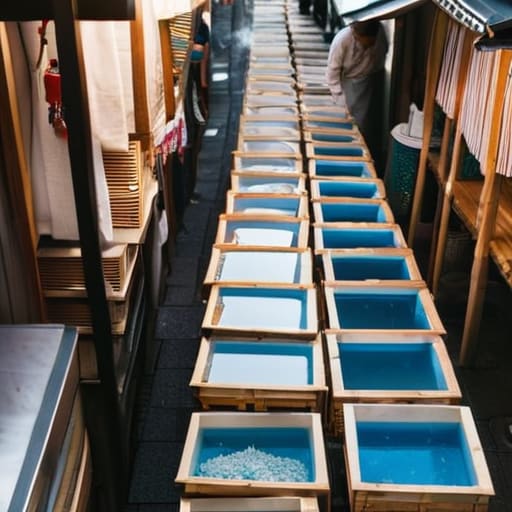
I stood at the edge of the crowd yesterday, watching a group of tourists pay triple the reasonable price for a piece of tuna that looked more like a marketing stunt than a meal. It’s the same old story: people flock to the tsukiji outer market expecting a polished, curated spectacle, only to find themselves caught in a logistical bottleneck of overpriced stalls and aggressive street food vendors. Most guidebooks treat this place like a theme park, but if you follow the neon lights and the loudest shouting, you’re going to miss the actual rhythm of the district.
I’m not interested in helping you check a box on a tourist itinerary. My goal is to help you navigate the narrow, salt-scented arteries of the market to find the stalls where the quality remains uncompromised by the hype. I will show you how to read the movement of the crowds, identify the vendors who have actually earned their place there, and find those quiet, functional corners where the food speaks for itself. This isn’t a guide to the spectacle; it is a blueprint for understanding how this market truly breathes.
Table of Contents
- Decoding the Tsukiji Market Opening Hours and Morning Flow
- Finding the Best Sushi Breakfast in Tokyos Quietest Corners
- Logistics of the Labyrinth: Five Essentials for Navigating Tsukiji
- Essential Lessons for Navigating the Market's Rhythm
- The Logistics of Flavor
- The Quiet After the Rush
- Frequently Asked Questions
Decoding the Tsukiji Market Opening Hours and Morning Flow
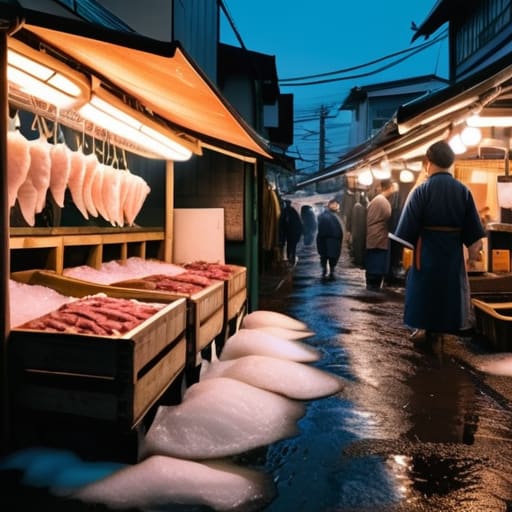
If you approach the market with the mindset of a tourist, you will likely find yourself fighting a losing battle against the crowds. To truly see the rhythm of this place, you must respect the clock. Most people assume a leisurely stroll is possible, but the reality of Tsukiji market opening hours is dictated by the tide and the early-morning logistics of the wholesalers. I’ve found that if you aren’t there by 7:00 AM, you aren’t witnessing the market’s true pulse; you are merely observing its leftovers.
The morning flow is a choreographed chaos that reminds me of the shipping docks I used to manage. There is a specific, heavy energy in the air as the fresh sashimi stalls begin their daily dance, moving crates with a precision that borders on the surgical. If you arrive early, you can bypass the midday heat and the frantic tourist rush, allowing you to secure the best sushi breakfast in Tokyo while the rice is still perfectly tempered and the fish is at its absolute peak. It is a narrow window of time, but for those willing to wake with the sun, the reward is a clarity you won’t find anywhere else.
Finding the Best Sushi Breakfast in Tokyos Quietest Corners
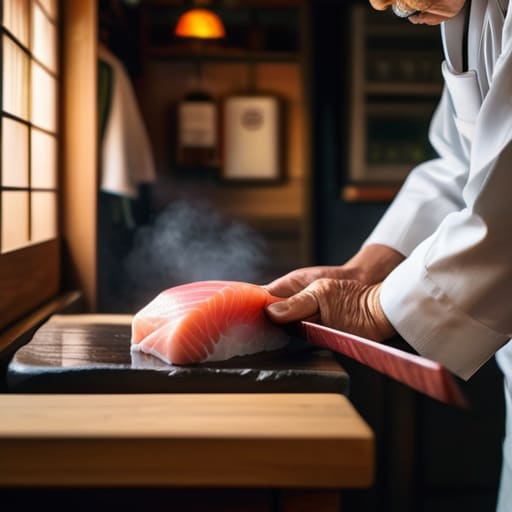
While the crowds gravitate toward the flashy, brightly lit stalls on the main thoroughfares, I prefer to drift toward the side streets where the steam from miso soup lingers in the cool morning air. There is a specific kind of grace found in these smaller, unassuming counters. This is where you find the best sushi breakfast in Tokyo, served not with theatrical flair, but with a quiet, practiced efficiency that speaks to decades of mastery. I often find myself sitting on a worn wooden stool, watching a chef slice through fatty tuna with a precision that reminds me of the logistics I once managed—every movement is purposeful, leaving no room for wasted motion.
The real magic happens when you bypass the heavy signage and look for the fresh sashimi stalls tucked into the narrowest gaps between buildings. Here, the interaction is minimal but profound; a nod of the head, a perfectly seasoned piece of nigiri, and the sudden realization that you are tasting the ocean’s morning harvest. It isn’t just about the meal; it is about the stillness of the moment before the city’s frantic rhythm fully takes hold.
Logistics of the Labyrinth: Five Essentials for Navigating Tsukiji
- Arrive before the morning rush dissipates. In my experience with logistics, timing is everything; if you reach the market after 10:00 AM, you aren’t participating in the rhythm of the city, you are merely fighting the crowd.
- Carry small denominations of yen. While Tokyo is modernizing, the true soul of these narrow stalls remains stubbornly cash-based. Don’t let a lack of coins stand between you and a perfect piece of uni.
- Prioritize the side streets over the main thoroughfares. The most profound flavors and the most honest interactions happen in the alleys where the signage is faded and the foot traffic thins out.
- Leave room in your itinerary for observation. Don’t treat this like a checklist. Bring your notebook, find a small corner, and watch how the vendors move; there is a functional elegance to their efficiency that is worth more than any meal.
- Dress for movement, not for a photo op. The ground is uneven and the spaces are tight. Wear sturdy shoes and practical clothing that allows you to navigate the crowded arteries of the market without hesitation.
Essential Lessons for Navigating the Market's Rhythm
Respect the clock; the market’s true character is revealed in the early morning hours, long before the midday crowds dilute the sense of purpose.
Look past the bright signage and follow the local workers; the most authentic stalls are often the ones tucked into the shadows of the main thoroughfares.
Embrace the logistical chaos rather than fighting it; a willingness to wander without a rigid itinerary is the only way to discover the market’s quietest, most functional beauty.
The Logistics of Flavor
“There is a profound, rhythmic efficiency to the Tsukiji morning; it isn’t just commerce, it is a finely tuned machine of salt, steel, and precision that reminds you a city only breathes because its smallest parts move in perfect unison.”
Rurik Salonen
The Quiet After the Rush
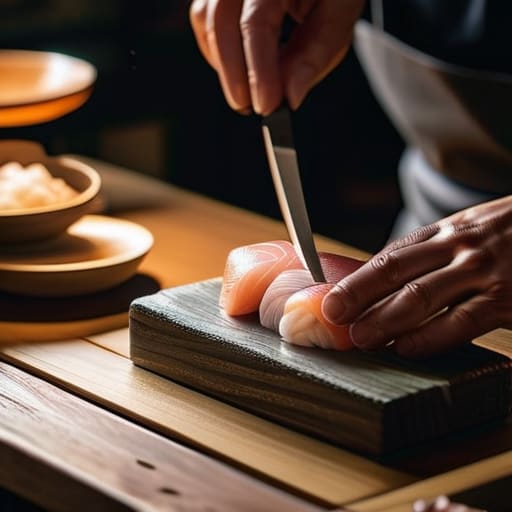
As I sit here on a wooden stool, watching the last few vendors roll up their heavy shutters, I realize that navigating Tsukiji is less about a strict itinerary and more about mastering the rhythm of the morning. We have covered the necessity of arriving before the crowds, the logistical dance of the opening hours, and the simple, profound joy of finding that perfect, quiet sushi counter tucked away from the main thoroughfare. If you respect the timing and lean into the sensory details—the scent of brine, the precision of a chef’s blade, and the organized chaos of the narrow lanes—you will find that the market offers far more than just a meal. It offers a masterclass in urban efficiency and tradition.
Ultimately, Tsukiji reminds me of what I always looked for in my years of logistics: a system that works because it honors its roots. Most travelers will leave this district with nothing more than a full stomach and a few blurry photos, but if you look closer, you will see the unseen heartbeat of Tokyo. It is in these small, functional moments—the exchange of a nod between a vendor and a regular, or the way the sunlight hits a crate of fresh tuna—that the city truly reveals itself. Don’t just visit to eat; visit to observe how a legacy survives in the modern age.
Frequently Asked Questions
How do I navigate the narrowest alleys without getting caught in the heavy morning crowds?
The trick is to treat the market like a logistics problem rather than a sightseeing tour. Arrive before 7:00 AM; by 9:00 AM, the arteries are already clogged. I find that moving one street parallel to the main thoroughfares—the smaller, unnamed veins—allows you to bypass the bottleneck. Keep your pace steady and your eyes up. If you respect the flow of the vendors, the crowd tends to part around you.
Is there a specific time when the smaller, more traditional stalls begin to pack up for the day?
The rhythm of the market shifts abruptly around 11:00 AM. While the larger, more tourist-facing storefronts might linger, the smaller, traditional stalls—the ones with the most character—begin their descent. By noon, the shutters are often halfway down, and the vendors are already mentally transitioning to the next day’s logistics. If you’re looking for that authentic, early-morning energy, aim to be there by 8:00 AM; after that, you’re merely watching the tide go out.
What are the logistical realities of paying for small goods in these older, more traditional shops?
Don’t let the charm of these stalls fool you; the logistics of payment require a bit of preparation. While the larger establishments have modernized, many of the smaller, family-run vendors still operate on a strictly cash-only basis. I always keep a dedicated pouch of yen—mostly small denominations—on me. Relying on a card or even a smartphone tap in these narrow alleys is a recipe for friction. In Tsukiji, cash is the true language of commerce.
