I was sitting on a weathered wooden bench in a small neighborhood pocket of Setagaya last Tuesday, watching the sunlight filter through a canopy of maple leaves, when it hit me. Most guidebooks will point you toward the massive, manicured imperial gardens or the crowded cherry blossom hotspots, treating public parks in japan as if they were mere backdrops for a selfie. But if you only chase the landmarks, you miss the actual rhythm of the city. You miss the way a local playground functions as a vital lung for a dense ward, or how a quiet corner of a municipal park offers a rare, functional silence amidst the logistical roar of the subway lines.
I have no interest in selling you a postcard fantasy. Instead, I want to show you how to navigate the greenery that actually matters—the spaces where the city breathes. I’m going to share my observations on finding those unassuming, quiet corners that offer genuine respite from the urban grind. My goal is to help you look past the tourist traps and understand the logistical soul of these spaces, so you can find your own pocket of stillness in the middle of the chaos.
Table of Contents
Tracing the Pulse of Urban Green Spaces in Tokyo
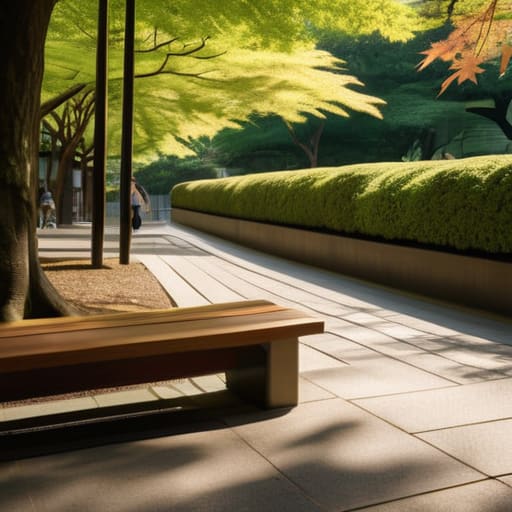
To understand Tokyo, one must look past the neon glare of Shinjuku and study the way its urban green spaces are woven into the concrete grid. These aren’t merely patches of grass; they are vital lungs. I often find myself sitting on a weathered bench in Yoyogi, watching the logistical flow of commuters transition into the slow, deliberate pace of a weekend stroll. There is a specific, rhythmic quality to how these areas function—they act as pressure valves for the city’s relentless kinetic energy.
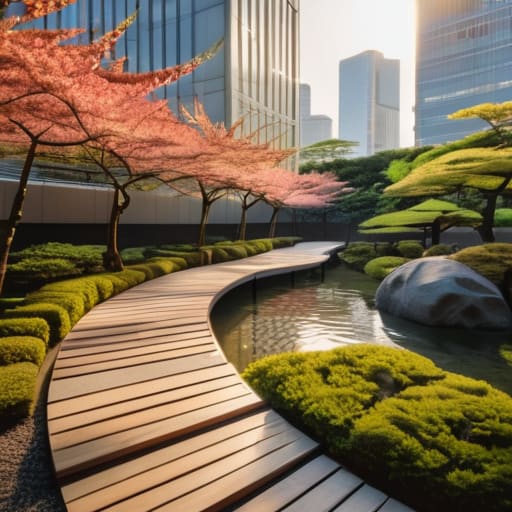
In my experience, the true mastery lies in the application of Japanese garden design principles even within these larger, more public settings. Even in a bustling metropolitan park, you will notice a calculated sense of space. There is a deliberate use of stone, water, and carefully pruned foliage that directs the eye and calms the mind. It is a subtle architecture of tranquility. Whether it is the controlled chaos of a grove or a small, tucked-away shrine, these spaces prove that a city doesn’t just need to move; it needs to breathe.
Finding Stillness Through Japanese Garden Design Principles

There is a profound logistical intelligence at play in how these spaces are structured. While most visitors look for a place to sit, I find myself studying the intentionality behind the layout. The application of Japanese garden design principles isn’t just about aesthetics; it’s about managing the flow of human energy. In many of these smaller, enclosed sanctuaries, the use of shakkei, or “borrowed scenery,” allows a tiny plot of land to feel infinitely larger by incorporating the distant skyline or a far-off mountain into the immediate view. It is a masterful way to expand a limited footprint without adding a single square meter of soil.
I often sit near the edges of these manicured landscapes, sketching the way stone and water interact. There is a specific, rhythmic quality to zen garden aesthetics—the way a single raked pattern in the gravel can dictate the pace of a person’s stride. You don’t rush through a space designed this way. Instead, the environment forces a deceleration. It is a deliberate counterbalance to the high-speed transit systems that feed into these urban pockets, providing a necessary functional silence amidst the metropolitan roar.
Navigating the Green: A Few Practical Observations
- Respect the unspoken hierarchy of space. In Japanese parks, you will notice a profound respect for personal boundaries; even in crowded cherry blossom season, people tend to occupy their designated patch of grass with a quiet, almost mathematical precision.
- Time your visits to the “lull.” If you want to capture the city’s breathing rhythm without the distraction of crowds, aim for the mid-morning hours on weekdays. The light is better for my film Leica, and the stillness is far more palpable.
- Observe the transit-to-green connection. The most efficient way to find a reprieve is to look for parks situated immediately adjacent to major subway hubs. These are the lungs of the city, designed to provide immediate relief to the urban worker.
- Pack for the micro-climates. A park that feels breezy near a pond can become stifling under a canopy of dense trees just twenty meters away. I always keep a light layer in my bag to account for these shifts in the urban micro-climate.
- Carry a small notebook, not just for sketches. Use it to note the specific times when the local rhythm changes—when the school children arrive, or when the salarymen take their evening stroll. These patterns are the true map of the park.
The Logistics of Leisure: Lessons from the Urban Green
True urban vitality isn’t found in the grand scale of a park, but in its ability to function as a necessary pressure valve for the surrounding metropolitan density.
Understanding the intentionality of Japanese garden design allows a traveler to move past mere sightseeing and begin observing the deliberate dialogue between nature and architecture.
The most profound connection to a city is often discovered in its quietest corners, where the rhythmic ebb and flow of local life provides a more honest portrait than any major tourist landmark.
The Geometry of Rest
“A Japanese park is never just a patch of grass; it is a masterclass in spatial management, where the deliberate placement of a single stone or a winding path serves to redirect the frantic energy of the city back into a state of quiet, functional equilibrium.”
Rurik Salonen
The Quiet Geometry of the City
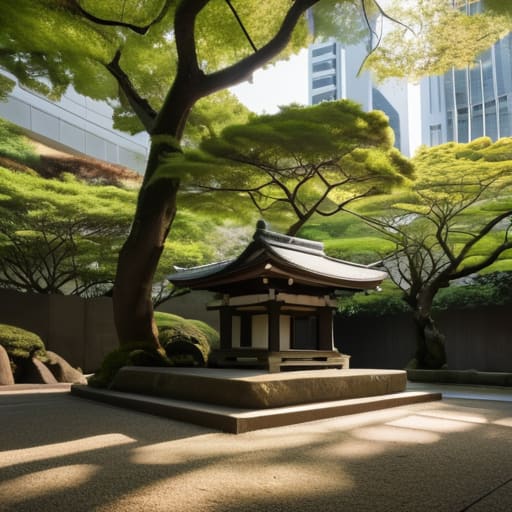
As I sit here in a small corner of a Shinjuku park, sketching the way the light hits the stone lanterns, I am struck by the sheer logistical necessity of these spaces. We have looked at how Tokyo’s sprawling green lungs serve as vital transit hubs for the spirit, and how the meticulous design principles of traditional gardens offer a deliberate counterweight to the urban rush. These parks are not merely decorative additions to a concrete landscape; they are the essential valves that regulate the pressure of metropolitan life, allowing the city to exhale when the pace becomes unsustainable.
If there is one thing my years in logistics taught me, it is that the most efficient systems are those that account for human equilibrium. Traveling through Japan has reinforced this belief, showing me that the true beauty of a nation lies in its ability to protect its quiet, functional corners amidst the roar of progress. Do not merely pass through these parks on your way to the next landmark. Stop. Sit. Observe the way the moss grows or how the wind moves through the bamboo. It is in these small, unhurried moments that you will finally begin to understand how a city truly breathes.
Frequently Asked Questions
How do the logistical rhythms of these parks change between the morning commute and the evening lull?
In the morning, these parks function as transit conduits—efficient, high-velocity arteries where commuters move with practiced, silent purpose. It is a choreography of momentum. But as the sun dips, the logistics shift entirely. The urgency evaporates, replaced by a slow, rhythmic expansion. The space stops being a way to get somewhere and becomes the destination itself, as the city’s frantic pace settles into a steady, communal exhale.
Are there specific etiquette nuances I should observe to avoid disrupting the quietude of a local neighborhood park?
In my years managing logistics, I learned that any system relies on the seamless cooperation of its parts. A neighborhood park is no different. To preserve that fragile quietude, keep your voice low and your movements unobtrusive. Avoid eating pungent foods that might disturb the air, and if you’re using a camera, be mindful of those seeking solitude. It isn’t about strict rules; it’s about recognizing that you are a guest in someone else’s sanctuary.
Beyond the major metropolitan hubs, how can one find these functional green spaces in smaller, more industrial cities?
In the industrial stretches of cities like Nagoya or Kawasaki, you won’t find manicured imperial gardens. Instead, look for the “pocket” logic. I’ve found that the most honest green spaces are often reclaimed—small, functional patches of greenery tucked between warehouses or alongside canal paths. They aren’t designed for spectacle, but for the workers and residents who need a moment of breath. Follow the riverbanks; that’s where the city’s real, unpretentious lungs reside.
