
I was sitting on a weathered wooden bench at a station in rural Shikoku last autumn, listening to the rhythmic, metallic clack-clack of a single diesel car pulling into a platform that seemed to exist only for the local farmers. Most travel guides will try to sell you a curated, high-gloss version of Japan—a series of polished “hidden gems” that are anything but hidden and often feel like theme parks for the weary traveler. They miss the point entirely. The true essence of japan small towns isn’t found in the gift shops or the reconstructed temples, but in the way the morning mist clings to a rice paddy and how the local train schedule dictates the very pulse of the community.
I have no interest in chasing the hype or recommending places that have been sanitized for the masses. Instead, I want to show you how to navigate the logistical reality of the periphery. I will share my observations on how to use the regional rail networks to reach the places that actually matter, and how to find the quiet, functional beauty in the corners of the country that most people simply bypass. This isn’t a list of monuments; it is a guide to understanding how the real Japan breathes.
Table of Contents
- Scenic Countryside Train Journeys Where the Map Ends
- Navigating the Quiet Rhythms of Remote Village Travel Tips
- The Logistics of the Slow Lane: Five Essentials for the Intentional Traveler
- The Logistical Essence of the Slow Path
- The Logistics of Stillness
- The Quiet Logic of the Road Ahead
- Frequently Asked Questions
Scenic Countryside Train Journeys Where the Map Ends
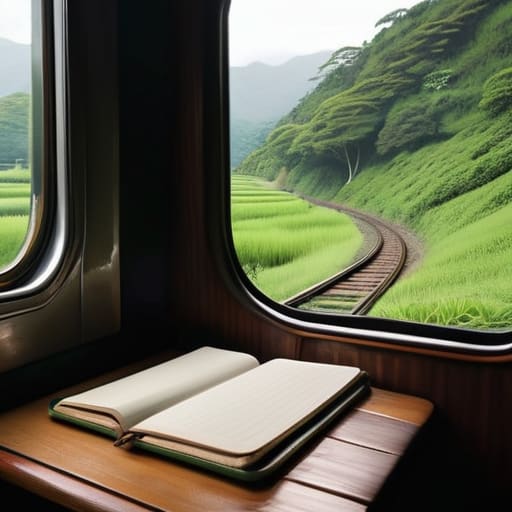
There is a specific kind of clarity that comes from watching the urban sprawl of Tokyo dissolve into the emerald greens of the Chūgoku region. When I sit by the window of a local line, my notebook open on my lap, I am not just looking at scenery; I am observing the logistics of isolation. These scenic countryside train journeys serve as more than mere transport; they are the lifelines connecting isolated pockets of history to the rest of the world. As the train slows for unmanned stations, the rhythm of the tracks becomes a meditation, pulling you further away from the neon-soaked chaos and into a slower, more deliberate tempo.
To travel these routes is to step into a living museum. You begin to notice the subtle shifts in traditional Japanese architecture, where the eaves of a farmhouse seem to bow to the surrounding cedar forests. It isn’t about the grand vistas, but the way a single, weathered wooden gate stands against the mist. Finding these authentic local experiences in Japan requires a willingness to embrace the occasional delay and the quiet stillness of a station where the only sound is the wind through the rice paddies.
Navigating the Quiet Rhythms of Remote Village Travel Tips
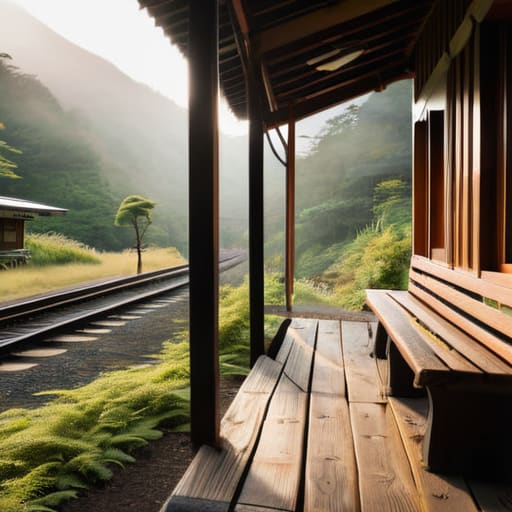
When you step away from the seamless efficiency of the Shinkansen, the logistical landscape shifts. Navigating these areas requires a different kind of mental map—one built on patience rather than speed. My first piece of advice for those seeking authentic local experiences in Japan is to embrace the concept of the “buffer hour.” In remote areas, a bus might arrive ten minutes late, or a small station might only serve one train every two hours. I’ve learned to view these gaps not as inconveniences, but as necessary intervals to sit, observe, and watch the light change over the mountains.
Preparation is also a matter of respect. Understanding basic Japanese countryside etiquette is vital; in these tight-knit communities, you are a guest in a living space, not just a spectator in a museum. A soft nod to a shopkeeper or a quiet demeanor in a local onsen goes a long way. I always keep my leather notebook handy to jot down the specific bus schedules or local walking paths I encounter, as digital maps can sometimes falter where the terrain gets steep. True discovery happens when you stop fighting the clock and start moving at the pace of the village itself.
The Logistics of the Slow Lane: Five Essentials for the Intentional Traveler
- Master the rhythm of the local timetable. In the cities, a missed train is an inconvenience; in the countryside, it is a fundamental shift in your day’s architecture. I’ve learned to treat the local line schedule as my primary compass, rather than a suggestion.
- Carry more than just a digital map. While my phone is useful, I find that a physical notebook and a printed local transit map are indispensable when the signal drops in a valley or a station agent speaks only the local dialect.
- Embrace the weight of cash. The seamless, contactless world of Tokyo’s Suica cards often dissolves once you cross into the smaller prefectures. I always ensure my leather wallet has a healthy reserve of yen for the small, family-run shrines and neighborhood tea houses that don’t recognize a chip.
- Look for the “Michi-no-Eki.” These roadside rest areas are the logistical heartbeats of rural Japan. They are more than just stops; they are curated windows into the local harvest and the community’s quiet pride, offering a glimpse of the region that no high-speed rail can provide.
- Pack for the transitions. Small-town travel involves more walking on uneven, narrow paths and more waiting on wind-swept platforms than urban commuting. Practical, sturdy footwear and a layer that can handle a sudden mountain mist are non-negotiable for staying observant and comfortable.
The Logistical Essence of the Slow Path
True connection to a region requires embracing the friction of local transit; the delays and transfers are not obstacles, but the very moments where the true character of a town reveals itself.
Seek out the functional quiet of small-town life by observing the intersection of tradition and utility, such as a local market or a single-track station, rather than searching for curated tourist experiences.
Carry a physical map and a notebook; in the periphery, digital precision often fails, and the manual act of navigating forces a deeper, more observant engagement with your surroundings.
The Logistics of Stillness
“Most travelers look for Japan in the neon glare of Shibuya, but I have always found its true pulse in the quiet intervals between stations—in those small, unassuming towns where the schedule is dictated by the seasons rather than the clock, and where the soul of the country reveals itself in the steady, unhurried rhythm of daily life.”
Rurik Salonen
The Quiet Logic of the Road Ahead
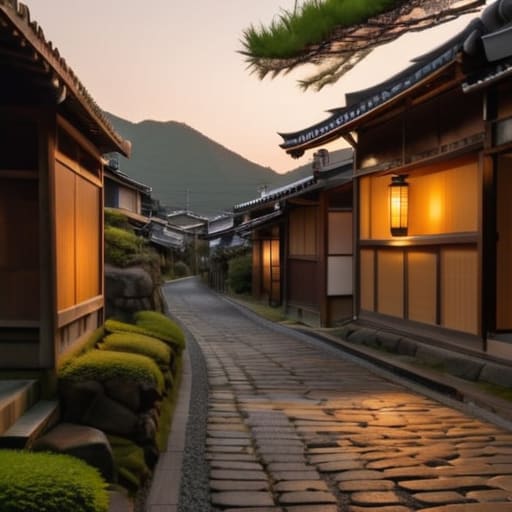
As I close my notebook and look back over the maps I’ve sketched, I am reminded that traveling through Japan’s smaller towns requires a shift in both logistics and temperament. We have discussed the necessity of embracing the slower pace of local rail lines, the importance of preparing for the logistical gaps in remote areas, and the way a well-timed arrival can transform a simple village visit into a profound experience. It is rarely the grand, high-speed connections that reveal the most; rather, it is the deliberate patience required when a local bus runs only twice a day or when a narrow alleyway leads you somewhere entirely unexpected. To find these places, one must be willing to trade efficiency for depth.
In the end, the true value of these journeys isn’t found in a souvenir or a photograph, but in the realization that a city or a village is a living, breathing organism. When you stop rushing toward the next monument, you finally begin to hear the rhythmic pulse of the landscape. I have learned that the most meaningful connections often happen in the silences between the stops. So, leave the crowded itineraries behind and allow yourself to get lost in the periphery. That is where you will find the unvarnished truth of how a place actually lives.
Frequently Asked Questions
How do I manage the logistics of getting from a major hub like Tokyo to a remote village where the train schedule only runs three times a day?
You don’t fight the schedule; you build your life around it. In my years of logistics, I learned that timing isn’t a suggestion—it’s the entire framework. First, download the offline timetables; paper maps won’t help when the signal drops in a valley. Second, treat that single afternoon train as your fixed anchor. Plan your arrival for the morning, find a local café, and let the waiting become part of the observation. Precision is your only ally.
Is it practical to rely on my physical maps and notebook in areas where English signage is sparse and digital connectivity is unreliable?
In my experience, relying solely on digital tools is a logistical gamble. When the signal drops or a battery dies in a rural station, panic sets in. My notebook and physical maps are my fail-safes. While they won’t translate a menu, they provide a tactile certainty that a flickering screen cannot. In areas with sparse English signage, a hand-drawn sketch of a junction or a marked transit node is often more reliable than any malfunctioning GPS.
What are the subtle etiquette shifts I should be aware of when moving from the high-speed efficiency of the Shinkansen to the slower, more communal pace of a rural town?
The Shinkansen is a vacuum of polite isolation; you exist in a bubble of silent efficiency. But as the tracks narrow and the pace slows, that bubble must expand. In rural towns, silence can feel like distance rather than respect. You’ll find that a small nod to the shopkeeper or a brief, measured greeting goes much further than the practiced anonymity of Tokyo. Here, you aren’t just a passenger passing through; you are a guest in a living community.
