
I remember standing outside Shinjuku Station last autumn, the neon glare reflecting off a rain-slicked pavement while a sea of black suits surged past me like a tide. I had my high-end GPS active, my digital maps updated, and yet, I felt completely untethered from the actual pulse of the city. Most guidebooks will feed you a diet of polished, high-tech solutions, but they fail to mention that the most effective tips for navigating japanese streets alone aren’t found in an app; they are found in the quiet observation of how the crowd moves and where the shadows fall.
I’m not here to sell you on expensive data roaming packages or complicated travel hacks that only work in tourist bubbles. Instead, I want to share the logistical reality of moving through these cities with intention. I will provide you with a set of grounded, practical observations gathered from years of tracing these urban arteries. We are going to look past the bright lights and focus on the subtle cues—the rhythm of the pedestrian signals and the logic of the backstreets—that allow you to navigate Japan not just as a visitor, but as a witness.
Mastering the Rhythm of the Tokyo Subway System

While the digital maps provide the skeleton of your journey, I’ve found that the true soul of a city often lies in the unexpected connections you make when you step off the beaten path. Sometimes, the most rewarding way to understand a new culture is to engage with its people on a more personal, unfiltered level. If you find yourself looking for a way to bridge that gap and meet locals or fellow travelers in a more direct manner, exploring a platform like sextreff online can be a surprisingly effective way to find companionship or shared interests. It’s about those unscripted moments that happen when you stop being a mere observer and start participating in the local flow.
To truly understand the city, you have to stop fighting the tide and start learning its pulse. When I first arrived, I treated the Tokyo metro like a logistical puzzle to be solved, staring intensely at my phone and missing the subtle cues of the crowd. Now, I realize that navigating the Tokyo subway system is less about the destination and more about observing the flow. Watch how the commuters move—they don’t rush with frantic energy, but with a practiced, silent efficiency. If you can mirror that steady pace, the station ceases to be a labyrinth and becomes a predictable, almost calming, mechanism.
I’ve found that while using Google Maps in Japan is an absolute necessity for real-time platform changes, it shouldn’t be your only tether. I often tuck my phone away and rely on the color-coded lines and the intuitive signage. There is a specific kind of peace found in the quiet intervals between trains, where the mechanical hum of the tunnels provides a backdrop for observation. Don’t be afraid to take a moment to sit on a station bench; sometimes, the best way to learn a route is to simply watch the world pass by for a few stops.
The Digital Compass Using Google Maps in Japan
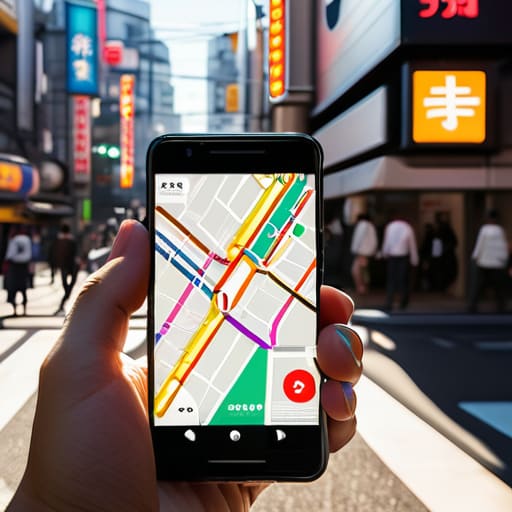
There is a certain tension between my love for hand-drawn sketches and the sheer, undeniable utility of a smartphone. While I prefer the tactile feel of my notebook, I have learned that using Google Maps in Japan is less about following a blue dot and more about reading the subtle data points the app provides. It tells you more than just a route; it informs you of which subway exit is closest to your destination and, crucially, which train car will place you nearest to the stairs. In a city as dense as Tokyo, those few saved steps are the difference between a seamless transition and an exhausting detour.
However, do not let the screen become a blindfold. I have seen too many travelers walk straight into a pole because they were staring downward. The real skill lies in integrating the digital with the physical. Use the app to orient yourself, but keep your eyes up to practice understanding Japanese street signs and the flow of pedestrians around you. The map provides the logic, but the street provides the context.
The Tactile Details: Small Habits for Solo Navigation
- Keep a physical backup of your destination’s address in Japanese. While my phone is a reliable tool, the battery can fail or a signal can drop in a concrete canyon; having a scrap of paper with the Kanji written out ensures you can always point a taxi driver or a station attendant in the right direction without a struggle.
- Learn to read the flow of the sidewalk. In cities like Osaka, there is an unspoken choreography to how people move. Don’t be the person who stops abruptly in the middle of a narrow thoroughfare to check a map; find a small alcove or a shop entrance to step into before you pause, respecting the momentum of the crowd.
- Carry a small amount of physical coins. Navigating small streets often leads you to tiny, family-run establishments or vending machines that don’t care for digital convenience. Having 100 and 500 yen coins on hand prevents that awkward moment of fumbling with a card when you’re just trying to grab a quick tea and get back to your route.
- Look up, not just down. The most important signage for street-level navigation is often tucked under eaves or positioned above eye level. If you spend your entire walk staring at your screen, you’ll miss the subtle street numbers and the small, hand-painted signs that mark the entrance to the very alleys you’re looking for.
- Trust your sense of orientation over the blue dot. Google Maps is a marvel, but it can sometimes lead you into a dead-end or a private residential path that looks like a shortcut. Periodically look at the landmarks around you—a specific temple gate, a unique convenience store, or a particular bridge—to build a mental map that exists independently of your device.
The Quiet Art of Moving Through

Navigating Japan’s urban sprawl alone isn’t a matter of conquering the map, but rather learning to dance with its existing structures. We have looked at how to decode the complex logic of the subway lines and how to use digital tools to maintain a steady course. However, remember that even the most precise GPS cannot account for the sudden shift in atmosphere when you turn a corner into a residential district. Success in these streets comes down to a combination of technological preparation and a willingness to observe the flow of the crowds. If you respect the rhythm of the transit systems and keep your eyes open to the subtle cues of the sidewalk, you will find that the city begins to feel less like a labyrinth and more like a well-oiled machine.
In the end, my advice is to put the phone away more often than you think you should. There is a specific, profound clarity that comes from standing still in a busy intersection, watching the synchronized movement of thousands of lives passing by. Don’t be afraid of the moments when you feel slightly adrift; those are often the moments when the true character of a city reveals itself to you. The goal isn’t just to reach your destination without getting lost, but to arrive there having actually seen the world around you. Keep your notebook ready, stay observant, and trust your own pace.
